A sleep tracker is useful as rough guidance — and harmful the moment you grade every night. The devices reliably detect whether you're asleep or awake. On the sleep stages they are often well off. Use the data as a weekly trend, not a verdict — otherwise you risk orthosomnia: worse sleep, driven by the fear of bad scores.
An executive in his early forties came to me with a problem that wouldn't have existed ten years earlier: his ring told him every morning that he had slept badly. Deep sleep too short, recovery score in the red, "readiness" low. He actually felt fine — until he looked at the display. After that, the day was ruined.
The absurd part: the man had no sleep problem. He had a tracker problem. The number had wedged itself between him and his own body signals. And the more he stewed over the bad scores, the worse he actually slept.
That is exactly what the question "are sleep trackers worth it" comes down to. Not the technology. What the technology does to your behaviour — and how reliable the data you're reacting to even is.

What a sleep tracker actually measures — and what it doesn't
The first mistake is baked into the word. A consumer sleep tracker doesn't measure your sleep. It measures proxies — and turns them into a guess.
In a sleep lab, a polysomnography runs: electrodes on the head record brain waves, plus eye movement and muscle tension. That's the gold standard, the only way to read true sleep stages. A ring or a watch has none of that. They measure movement, heart rate, heart rate variability, sometimes skin temperature and breathing — and an algorithm estimates from that which stage you're in.
For the crudest question this works surprisingly well: are you asleep or awake? Here modern devices reach over 90 percent agreement with the lab. Rough patterns too — when you fell asleep, how often you woke, how long you lay in bed — they usually get in a usable range.
The trouble starts one level down: splitting the night into light, deep and REM sleep. Precisely the numbers everyone stares at.
How accurate the numbers really are
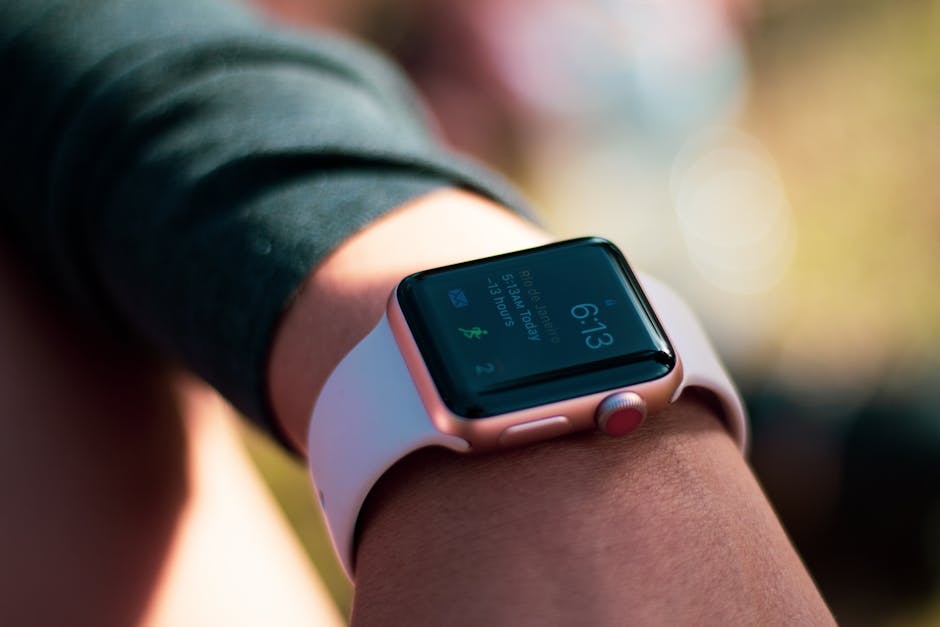
A validation study from 2023 that tested eleven common sleep trackers against polysomnography shows the pattern clearly: wake versus sleep — good. Individual sleep stages — mixed to weak. For some devices the hit rate on the stages sat in a range where educated guessing wouldn't do much worse.
Just how big the gaps between devices are becomes visible in a 2024 comparison. Oura Ring, Fitbit and Apple Watch went up against the sleep lab. The result: at telling sleep from wake, all three were very good. On the sleep stages the Oura Ring led, while the Apple Watch underestimated deep sleep by 43 minutes and overestimated light sleep by 45 minutes. Nearly an hour and a half of difference — for one and the same night.
In practice that means: when your tracker shows "58 minutes of deep sleep" today, the true value could easily be half an hour off. In either direction. The absolute number is therefore barely reliable. What has some value is the trend over weeks — provided you wear the same device the same way.
And even the best ring only tells you that something happened — not why. A bad score can come from the second glass of wine, the late workout, the infection brewing, or simply the algorithm mistaking your quiet time awake for deep sleep. The cause is never in the display. That's the same mistake as with many biohacking gadgets: they deliver data, but no interpretation.
Orthosomnia: when the measuring itself becomes the problem

In 2017, a group of sleep physicians described a new pattern in their clinic: patients arrived convinced they slept badly — not because of symptoms, but because of their tracker data. They had changed their behaviour, some sought treatment, even though there was no clinical finding. The researchers gave the phenomenon a name: orthosomnia — the perfectionist pursuit of the ideal sleep score.
The mechanism is treacherous because it feeds itself. The tracker reports a bad night. That creates worry. Worry raises tension in the evening. Tension worsens sleep. The tracker reports the next bad night. A measuring device turns into a sleep police force that passes a verdict every night — and the verdict itself becomes the disruptor.
How common this is was examined in a 2024 population study. Depending on the threshold applied, roughly 3 percent under a strict and up to 14 percent under a lenient definition showed signs of orthosomnia. That's not a fringe issue of a few gadget nerds. It's a measurable share of perfectly ordinary tracker users.
The most susceptible are, of all people, the ones I see most in my practice: performance-driven entrepreneurs and executives. Someone used to optimising every metric treats a sleep score like a quarterly result. Only sleep can't be forced by effort. That's exactly what makes it so frustrating for control-minded people.
When a sleep tracker is worth it
So far this reads like a takedown. It isn't. A sleep tracker can be a useful tool — if you use it for what it can do, not for what it promises.
The strength is in the trajectory. Whether your average sleep duration has dropped over a month, whether you fall asleep later in stressful phases — a tracker shows this more reliably than your memory. Single nights are noise. The trend is the signal.
It gets interesting when you link the data to your behaviour. Alcohol, late meals, hard evening training, screen time — the tracker reveals which of these actually costs you sleep. Not as a verdict, but as an experiment.
A constant bed and wake time is one of the strongest levers for good sleep — and one a tracker captures well. If your rhythm swings a lot, that's often more telling than any single deep-sleep figure.
If the tracker shows odd patterns over weeks — frequent night wakings, strongly fluctuating heart rate — that can be a reason to get real diagnostics. As a hint it works. As a diagnosis it doesn't.
The common thread: a tracker doesn't replace understanding your system, it can at most nudge it. Recovery doesn't come from measuring, but from steering load, sleep, nutrition and stress together. The ring shows you the smoke. You have to look for the fire elsewhere.
How to use it without becoming its hostage
If you wear a sleep tracker or are toying with the idea, I stick to five simple rules. They cost nothing and protect you from the point where the device turns against you.
One: no glance at the score during the night. If you wake up, the display stays dark. The light disturbs, and the number creates stress that blocks falling back asleep. Data is a morning matter, not a night one.
Two: only the weekly trend counts. Ignore the single night. Look at the curve once a week at most. A bad night is normal and says nothing — a pattern over four weeks says something.
Three: the body wins. If you feel rested but the ring says "bad" — believe yourself, not the ring. Subjective recovery is the endpoint, not the number on the way there.
Four: one device, same conditions. Data only becomes comparable when you wear the same device the same way. Ring today, watch tomorrow, mattress mat the day after — you're comparing apples to oranges.
Five: for a real suspicion, see a professional, not an app. If you suspect a serious sleep disorder — loud snoring with breathing pauses, chronic trouble falling or staying asleep — that belongs in a sleep lab, not in the readout of a consumer app.
And if you can't shake the feeling that the tracker stresses you more than it informs you: put it away for two weeks. The most honest insight about your own sleep sometimes arrives the moment you stop grading it. If you want to understand why you stay tired despite solid nights, a number on a ring won't get you there — that takes a look at the whole system. That's the core of a structured assessment: sleep, load, nutrition and blood values as a connected picture, not as separate metrics.
Are sleep trackers worth it?
As rough guidance yes, as a diagnostic device no. Sleep trackers reliably detect whether you are asleep or awake — but they are often well off on the sleep stages (light, deep, REM). They are useful when you watch long-term trends and take the numbers lightly. They turn harmful the moment you grade every single night.
How accurate are sleep trackers?
For telling sleep from wake, good devices reach over 90 percent agreement with the sleep lab. For sleep stages accuracy drops sharply — in validation studies the hit rate for individual stages was at times below 40 percent. Depending on the device, REM and deep sleep are mis-estimated by up to 45 minutes per night.
What is orthosomnia?
Orthosomnia describes sleep problems caused by the pursuit of perfect tracker data. The term comes from a 2017 case series. When you police every deviation from a good score, you build pressure — and pressure is poison for sleep. In population samples, depending on the threshold, roughly 3 to 14 percent of tracker users show such patterns.
Which sleep tracker is the most accurate?
In head-to-head comparisons with the sleep lab, rings such as the Oura Ring usually beat smartwatches on sleep stages. In a 2024 study the Oura Ring classified the stages most reliably, while an Apple Watch underestimated deep sleep by 43 minutes. No consumer device replaces a polysomnography in a sleep lab.
Should I check my sleep data during the night?
No. Checking the tracker when you wake at night makes two mistakes: the display light disturbs sleep, and the number creates stress that makes falling back asleep harder. Look at the data in the morning at most — and as a weekly trend, not a single night.
Scientific sources
- Baron KG, Abbott S, Jao N, Manalo N, Mullen R. Orthosomnia: Are Some Patients Taking the Quantified Self Too Far? Journal of Clinical Sleep Medicine. 2017;13(2):351–354. PMID 27855740. https://doi.org/10.5664/jcsm.6472 — first description of orthosomnia.
- Jahrami H, Trabelsi K, Husain W et al. Prevalence of Orthosomnia in a General Population Sample: A Cross-Sectional Study. Brain Sciences. 2024;14(11):1123. PMID 39595886. https://doi.org/10.3390/brainsci14111123 — how common orthosomnia is in the population.
- Lee T, Cho Y, Cha KS et al. Accuracy of 11 Wearable, Nearable, and Airable Consumer Sleep Trackers: Prospective Multicenter Validation Study. JMIR mHealth and uHealth. 2023;11:e50983. PMID 37917155. https://doi.org/10.2196/50983 — accuracy of common sleep trackers versus polysomnography.
- Robbins R, Weaver MD, Sullivan JP et al. Accuracy of Three Commercial Wearable Devices for Sleep Tracking in Healthy Adults. Sensors. 2024;24(20):6532. PMID 39460013. https://doi.org/10.3390/s24206532 — comparison of Oura Ring, Fitbit and Apple Watch.
This article is for information and does not replace a medical or sleep-medicine diagnosis. If you suspect a sleep disorder — such as sleep apnoea, or chronic trouble falling or staying asleep — see a doctor or a sleep lab. Consumer sleep trackers are wellness products, not medical devices.