Improving your recovery doesn't mean doing more — it means steering your rest so that adaptation happens. The stimulus comes from training, the progress from the recovery afterwards. The strongest levers are sleep, enough protein, light movement on rest days, and managing everyday stress — in that order. Cold, foam rolling and gadgets are polish, not foundation. Push on through a drop in performance and you lengthen recovery instead of shortening it.
An ambitious runner came to me with a problem he couldn't make sense of: he was training more than ever — and getting slower. Six sessions a week, clear goals, iron discipline. And still his performance stalled, his sleep got worse, his morning resting heart rate climbed. His conclusion: train even more. His body was saying the opposite.
That's the most common thinking error I see when people want to improve recovery. They treat rest as whatever is left over once the training is done. As downtime. When it's exactly the other way round: training sets the stimulus — but the progress happens in the recovery afterwards. Neglect that part and you don't build. You break down.
This article is the foundation for the whole topic of recovery — from understanding what really happens in the body, through the levers that measurably work, to the practices that promise a lot and deliver little.

Recovery isn't doing nothing — what happens in the body
When you train, something counterintuitive happens first: you get weaker in the short term. A training stimulus is a controlled disturbance — muscle fibres take microscopic damage, energy stores empty, the nervous system is taxed. In that moment you aren't more capable than before. You're more depleted.
The actual build-up comes afterwards. In the recovery phase the body repairs the stressed tissue and refills the stores — not just back to baseline, but a little beyond it. This principle is called supercompensation: the body prepares for a load higher than the one it just experienced. That's the window in which your capacity rises.
This has an uncomfortable consequence. If the next hard stimulus arrives before supercompensation is complete, you're training on a system that hasn't recovered. Do that once and it's no problem — brief overload is part of any sensible training plan. Do it for weeks without letting the body adapt, and the system tips over. Productive stimulus becomes creeping decline.
That's exactly what had happened to the runner. Not too little stimulus — too little recovery between the stimuli. The official consensus statement on overtraining from the European and American sports medicine societies describes precisely this pattern: successful training must involve overload — but it must avoid the combination of excessive overload and inadequate recovery. The edge is narrow, and it's individual.
How long recovery takes — and why the question is wrong
The most common question is: how long do I have to rest? The honest answer is unsatisfying — it depends. But there are usable reference points.
As a rule of thumb, the same muscle group needs about 48 to 72 hours after an intense strength session before it's fully loadable again. After especially hard stimuli — max strength, a competition, an unfamiliar movement pattern that leaves proper soreness — full recovery can take three to seven days. A light endurance session, by contrast, is often handled by the next day.
Why can't this be calculated precisely? Because too many factors interact. Your training status — a beginner needs longer than an experienced athlete. Your sleep. Your nutrition. And above all your stress level outside of training. Two people on the same plan recover completely differently if one sleeps eight hours and the other is in the middle of a work crisis.
So the better question isn't "how long" but "how do I recognise it". Your body gives clear signals when recovery isn't enough:
- Performance stalls or drops — despite equal or greater effort
- Your resting heart rate in the morning is elevated for several days
- Sleep gets worse even though you're tired
- Mood turns: irritability, low drive, no appetite for training
- Soreness lasts unusually long, minor infections pile up
These signs almost never mean you're training too little. They mean you're training too much for the recovery you allow yourself. The runner cut two sessions a week and built a planned deload week into his progression. Three weeks later he was running personal bests again — with less training, not more.
The four levers that actually work
There's an industry keen to sell you expensive tools for better recovery. Most of it is polish. The levers that genuinely make the difference are unspectacular, cost little — and are underestimated for exactly that reason.
1. Sleep — the lever with no rival
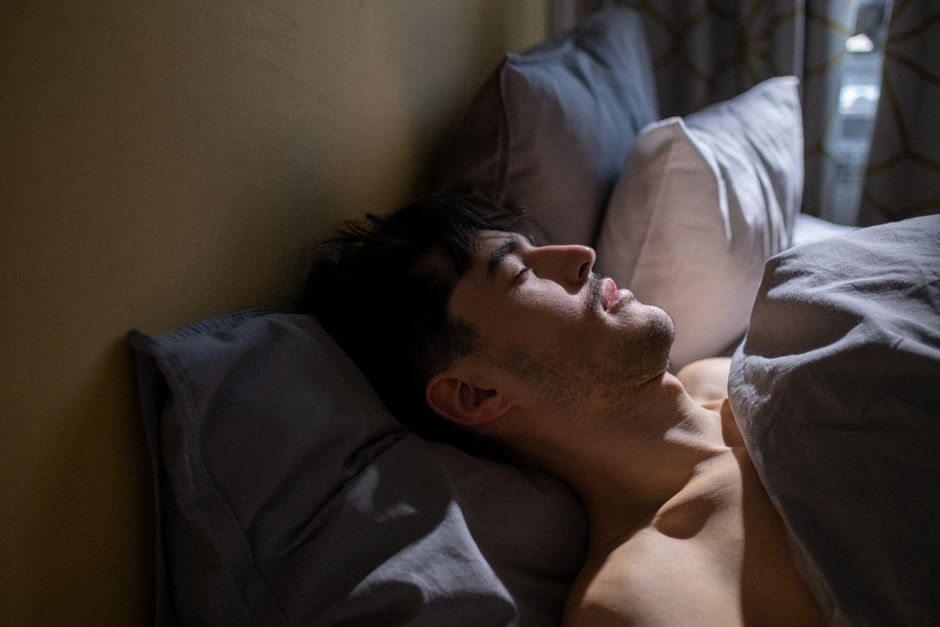
No supplement, no treatment, no device comes close to good sleep. While you sleep, your body releases most of the growth hormone responsible for tissue repair. The nervous system recovers, the brain clears out. Sleeping under seven hours sabotages recovery at its single most important point.
How strong the effect is shows in a well-known Stanford study on basketball players: when they extended their sleep to around ten hours over several weeks, they got measurably faster in the sprint and shot noticeably more accurately — with the same training. Just more sleep. The study is freely available via PubMed and one of the clearest pieces of evidence that sleep isn't a soft factor but a hard performance parameter.
Seven to nine hours is the target. If you want to work on your sleep, the details are worth a closer look — I've collected the concrete levers in a separate piece on improving sleep quality.
2. Nutrition — building material and energy
Recovery is also a materials problem. The body can only repair damaged tissue if it has the building blocks. Two things really matter:
Protein. It supplies the amino acids for muscle building. For active people, roughly 1.6 to 2.0 grams per kilogram of body weight per day is a sensible range, spread across several meals. The exact timing matters less than the total amount over the day — the anabolic window is wider than was long claimed.
Carbohydrates. They refill the glycogen stores that intense training empties. Eat low-carb and train hard at the same time, and you'll often wonder about sluggish recovery and flat sessions. No reason for dogma in either direction — but the energy has to be there.
Then there's fluid: even mild dehydration worsens recovery. A rough guide is 30 to 40 millilitres per kilogram of body weight per day, more on hard training days.
3. Active recovery — movement over standstill

In the days after a hard session, complete standstill often isn't the best choice. Light movement — a brisk walk, easy cycling, relaxed swimming — boosts circulation and helps the body clear metabolic by-products and bring nutrients into the tissue.
The key is intensity. Active recovery is genuinely light — so light that you feel fresher afterwards, not more depleted. Turn it secretly into another training session and you miss the point. A walk in the woods beats the week's third hard ride here — not because it's tougher, but because it isn't.
4. Heat — the sauna as an underrated tool

Heat relaxes the muscles, widens the blood vessels and improves circulation — all processes that favour recovery. The sauna is more than a feel-good ritual. A large Finnish long-term study of over 2,300 men found a clear link between frequent sauna use and a lower risk of cardiovascular and all-cause mortality — the more often, the stronger the effect. The data was published in JAMA Internal Medicine.
For pure training recovery the sauna is no miracle cure, but a solid supporting tool — especially combined with the first three levers. The one caveat is timing: right after a very intense strength session, heat calls for similar caution to cold, which brings us to the next point.
What's overrated — cold, endless stretching, gadgets

Here it gets uncomfortable, because some popular rituals deliver far less than their reputation — and one of them actively harms muscle building.
Ice baths and cold after strength training. The ice bath has become a status symbol. For muscle building it's an own goal. A controlled study had men do twelve weeks of strength training — one group recovered in cold water afterwards, the other did easy active recovery. Result: the active group gained clearly more strength and muscle mass. Cold immediately after training dampens exactly the signals that trigger growth. The study in the Journal of Physiology reaches a clear conclusion: regular cold straight after strength training should be reconsidered. Cold has its place — for instance, short-term recovery between two competitions on the same day. After the strength session, if you want to build muscle, it doesn't belong there.
Static stretching as a recovery tool. Long, intense stretching after training doesn't speed recovery — it can further irritate the stressed muscle. There's nothing wrong with easy mobility work. But as a recovery tool, stretching is overrated.
Foam rolling and massage guns. The foam roller feels good and can briefly ease the soreness sensation. Only: the evidence is thin. A meta-analysis across 21 studies found only small, partly negligible effects on recovery and performance — at most, foam rolling helps to lower the perception of pain after training a little. That's no reason to throw the roller away. But it is a reason not to mistake it for a real recovery lever. It's the icing, not the cake.
The pattern is always the same: the spectacular, expensive, well-marketed tools sit right at the top of attention — and right at the bottom of effect. Sleep, nutrition and load management are boring. They still work the hardest.
The blind spot: your everyday stress counts too
The biggest recovery mistake happens outside of training. Most people treat sport as a physical topic and stress as a mental one — two separate accounts. But the body keeps only a single account.
Cortisol, the central stress hormone, rises regardless of where the stress comes from. A hard interval session drives it up. A crisis meeting drives it up just the same. Your nervous system doesn't care whether the load comes from the barbell or the quarterly close — it adds it all together.
That's why the same training week is easy to handle in a calm phase and tips into overtraining during a work emergency. Someone under high psychological pressure who also trains intensely loads their system on two fronts. The result: worse recovery, stalling performance, higher injury risk. An important part of this bill runs at night — chronically elevated cortisol disrupts sleep, and poor sleep drives cortisol up further. How to break that loop is something I've described in the piece on lowering cortisol at night.
The practical consequence is uncomfortable for people who like to deliver: in stressful phases of life, less or lighter training is often the smarter choice. Not as weakness, but as arithmetic. Ignore it and you train against yourself.
Making recovery measurable — HRV as a control variable
So far there's been a lot of feel and rules of thumb. But there is a way to make recovery at least partly measurable — heart rate variability, or HRV.
HRV measures the tiny fluctuations in the gap between two heartbeats. It sounds technical, but it's a surprisingly good window onto your autonomic nervous system: is it recovered and ready for load — or still in exhaustion mode? An individually high morning value points to good recovery; a collapsed value is a warning to take the day more gently.
That this isn't a gimmick marker shows in the research: in one study, runners steered their hard sessions by morning HRV — they only trained hard when the value allowed it. That group improved their running performance even though they did fewer hard sessions overall than the group on a rigid plan. Less, but at the right time — and the result was better.
One important caveat: the single morning value fluctuates and says little on its own. What counts is the trend over weeks — and the interpretation in the context of sleep, training and life phase. This is exactly where the most common mistake happens: people stare at the daily number and miss the pattern. A number without context isn't control, it's a new stressor.
Anyone who wants to steer their recovery not by gut feeling but in a structured way needs both in the end: the basics executed with discipline, and a plan that deliberately balances load and recovery. For self-implementers who want such a plan, Blueprint Digital is the right entry point. Anyone who needs the full assessment — including diagnostics and the question of why recovery isn't working in a specific case — will find the framework in what the Blueprint Session covers: training, sleep, nutrition, blood work and stress as one connected system, not as separate building sites.
Because in the end, recovery follows the same rule as everything else: the system decides — not the single component.
How long does recovery take after training?
As a rule of thumb, the same muscle group needs 48 to 72 hours before it's fully loadable again. After very intense sessions — max strength, competition, unfamiliar movements — full recovery can take 3 to 7 days. There is no exact number: training status, sleep, nutrition and stress together determine how fast your body adapts. Pushing on through lasting soreness or dropping performance lengthens recovery rather than shortening it.
What helps recovery the most?
The strongest lever is sleep — no supplement and no gadget comes close to 7 to 9 hours of good sleep. After that come enough protein and carbohydrates, light active movement on rest days, and managing everyday stress. Heat such as sauna can support recovery. Cold exposure, foam rolling and gadgets are polish, not foundation — they don't replace the basics.
Are ice baths good for recovery?
It depends on the goal. Straight after strength training, cold exposure demonstrably blunts muscle growth: cold-water immersion after every session led to smaller strength and muscle gains over twelve weeks than active recovery. If you want to build muscle, don't put the ice bath right after your strength session. For short-term recovery between two competitions on the same day, cold can make sense.
How do I know I'm under-recovering?
The typical early warnings: performance stagnates or drops despite equal or greater effort, your resting heart rate in the morning is elevated, sleep gets worse, mood turns — you're irritable or flat. Lasting soreness and frequent minor infections add to it. These signs rarely mean you're training too little — usually you're training too much for the recovery you allow yourself.
Is active or passive recovery better?
Both have their place. Active recovery — easy cycling, a walk, gentle swimming — boosts circulation and helps in the days after a hard session. Passive recovery like sleep and genuine rest is non-negotiable when the system is heavily loaded. The art isn't choosing one, it's recognising what your current state needs.
Can recovery be measured?
Partly. Morning heart rate variability (HRV) is the most usable everyday marker for the recovery of your autonomic nervous system. An individually raised or collapsed value is a signal to adjust the day's load. In studies, HRV-guided training improved performance with fewer hard sessions. The key: the trend over weeks matters, not the single morning reading.
Scientific sources
- Roberts LA, Raastad T, Markworth JF et al. Post-exercise cold water immersion attenuates acute anabolic signalling and long-term adaptations in muscle to strength training. The Journal of Physiology. 2015;593(18):4285–4301. PMID 26174323. https://doi.org/10.1113/JP270570
- Mah CD, Mah KE, Kezirian EJ, Dement WC. The effects of sleep extension on the athletic performance of collegiate basketball players. Sleep. 2011;34(7):943–950. PMID 21731144. https://doi.org/10.5665/SLEEP.1132
- Meeusen R, Duclos M, Foster C et al. Prevention, diagnosis, and treatment of the overtraining syndrome: joint consensus statement of the ECSS and ACSM. Medicine & Science in Sports & Exercise. 2013;45(1):186–205. PMID 23247672. https://doi.org/10.1249/MSS.0b013e318279a10a
- Wiewelhove T, Döweling A, Schneider C et al. A Meta-Analysis of the Effects of Foam Rolling on Performance and Recovery. Frontiers in Physiology. 2019;10:376. PMID 31024339. https://doi.org/10.3389/fphys.2019.00376
- Laukkanen T, Khan H, Zaccardi F, Laukkanen JA. Association between sauna bathing and fatal cardiovascular and all-cause mortality events. JAMA Internal Medicine. 2015;175(4):542–548. PMID 25705824. https://doi.org/10.1001/jamainternmed.2014.8187
- Vesterinen V, Nummela A, Heikura I et al. Individual Endurance Training Prescription with Heart Rate Variability. Medicine & Science in Sports & Exercise. 2016;48(7):1347–1354. PMID 26909534. https://doi.org/10.1249/MSS.0000000000000910
This article is for general information and does not replace individual medical or therapeutic advice. If you have persistent exhaustion, pain or suspected overtraining, speak with a doctor. Training and recovery recommendations always need to be judged in individual context.