Improving sleep quality means optimising sleep architecture. Not simply sleeping longer, but achieving more deep sleep and REM sleep. The five key levers are: consistent wake time, caffeine cut-off in the early afternoon, reducing or eliminating alcohol, making your sleep environment cooler and darker, and limiting evening screen use.
- Consistent wake time — even at weekends
- Caffeine: last intake no later than 2 p.m.
- Alcohol: demonstrably disrupts REM — even in small amounts
- Bedroom: below 19°C (66°F), completely darkened
- Screens: put away 60–90 minutes before sleep
Markus W. arrives at his first session with a sobering assessment: he sleeps seven hours. Sometimes even eight. Goes to bed early, falls asleep quickly. Yet he wakes up unrefreshed. In the afternoon he battles the slump. Coffee is no longer a pleasure — it's fuel.
The problem wasn't sleep duration. It was sleep quality: too little deep sleep, barely any REM phases, too many unconscious wake events caused by the habit of drinking two glasses of wine in the evening. The body lay in bed for eight hours — but barely recovered.
Improving sleep quality is not the same as sleeping longer. That sounds obvious — and yet most people ignore it. Because hours are measurable. Because the architecture of sleep is invisible — until you start looking more closely.
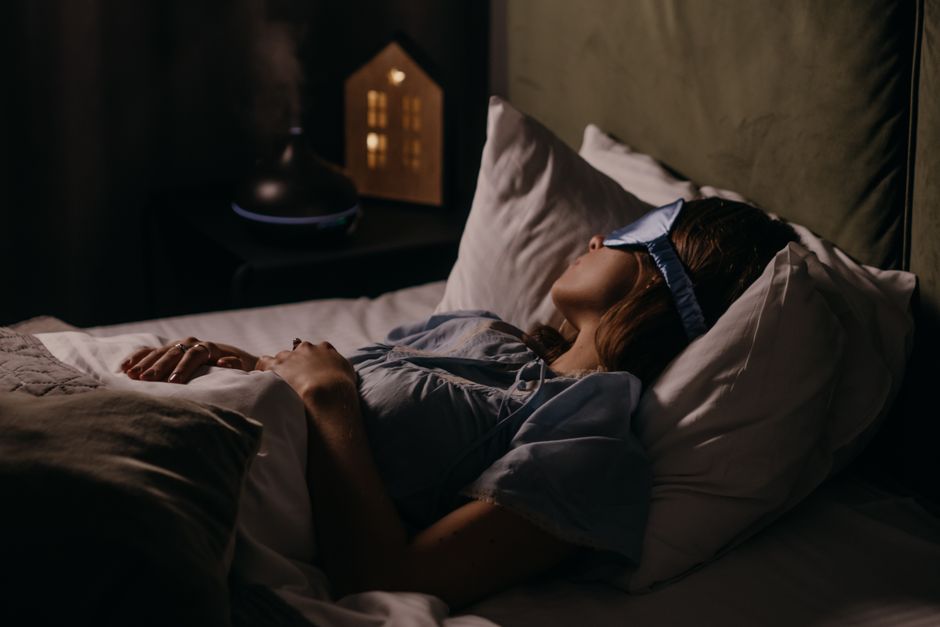
Sleep duration vs. sleep quality — the crucial difference
Sleep duration is what we measure. Seven hours. Eight hours. Six hours and thirty minutes. It's easy to quantify — which is why it's what most people think about when they think about sleep.
Sleep quality is what determines recovery and regeneration. It describes what actually happens during those hours: How deeply am I sleeping? How long do I stay in the restorative phases? How often do I briefly wake without noticing?
The National Sleep Foundation defines sleep quality using four indicators: sleep onset latency under 30 minutes, waking less than once per night, not lying awake for more than 20 minutes after waking, and actually sleeping at least 85% of time in bed. That's the theory. In practice, the decisive benchmark is simpler: if you wake up feeling restored, you slept well — regardless of the number of hours.
The problem: many people have drifted so far from truly restorative sleep that they no longer know what it feels like. They've come to accept chronic exhaustion as the normal state.
What happens in your body when you don't sleep enough

Sleep deprivation is not a comfort problem. It's a physiological problem — with direct consequences for the hormonal system, immune function, cognitive performance, and body composition.
Cortisol and testosterone. Even a single night of fewer than six hours of sleep measurably elevates cortisol levels the following day. At the same time, testosterone drops — studies show that one week of five hours of sleep per night can reduce testosterone levels in young men by 10 to 15% (Leproult & Van Cauter, JAMA 2011). Both together mean: more stress response, less anabolic capacity, worse recovery.
Immune system. Chronic sleep deprivation demonstrably increases susceptibility to infections. A review in Physiological Reviews (Besedovsky et al. 2019) shows that sleep is directly involved in immune regulation — not just through recovery, but through active processes: cytokine release, T-cell activation, immunological memory. Those who chronically undersleep systematically weaken this system.
Cognition and decision-making. The prefrontal cortex — the part of the brain responsible for rational decisions and impulse control — is especially sensitive to sleep deprivation. The insidious part: those affected typically underestimate their own performance loss. You no longer notice quite how impaired you are.
Body composition. Sleep deprivation raises ghrelin (the hunger hormone) and lowers leptin (the satiety hormone). The result: more hunger, worse satiety, stronger cravings for calorie-dense foods. Dieting without sleep doesn't work — the body works against you.
Sleep stages: why architecture is what matters
A night's sleep is not uniform. It's structured in cycles — each lasting approximately 90 minutes, with four to six cycles per night. Within each cycle, different sleep stages are traversed, each with distinct functions.
Light sleep (N1 and N2)
The transition from wakefulness into sleep. N2 makes up the largest portion of the night — roughly 45 to 55%. Initial consolidation processes take place here, and the body begins to recover. No problem if you briefly wake and drift back into N2.
Deep sleep (N3 — slow-wave sleep)
This is the most critical stage for physical recovery. Growth hormone is released, muscle tissue repaired, the immune system actively regulated, and the brain cleansed of metabolic waste products (glymphatic system). Deep sleep dominates in the first half of the night — those who go to bed late lose a disproportionate amount of it.
REM sleep (Rapid Eye Movement)
Cognitive recovery, emotional processing, memory consolidation. REM sleep accumulates in the second half of the night — between 4 a.m. and 7 a.m. Those who rise early cut off exactly this portion. Alcohol, certain medications, and an irregular sleep rhythm systematically suppress REM.
The conclusion: it's not total hours that matter, but the ratio of these phases. A healthy adult needs approximately 15 to 20% deep sleep and 20 to 25% REM sleep per night. Those who don't achieve this — regardless of how long they sleep — will not wake up restored.
The five factors that truly determine your sleep quality
Wake time is the strongest anchor of the circadian rhythm — not bedtime. Those who wake at the same time every morning accumulate adenosine (sleep pressure) evenly throughout the day and fall asleep more easily in the evening. Sleeping in at weekends sounds logical — but creates social jet lag that costs you the whole week.
Implementation: same wake time even at weekends, maximum 30 minutes variationCaffeine blocks adenosine receptors — the molecule that signals sleepiness. The half-life of caffeine is five to seven hours. A coffee at 3 p.m. means half of that caffeine is still active at 9 p.m. This not only delays sleep onset, it measurably reduces the amount of deep sleep — even when you don't subjectively perceive your sleep as disrupted.
Implementation: last coffee no later than 1–2 p.m.Alcohol shortens sleep onset time — which makes it attractive as a sleep aid. But it fragments the second half of the night, raises core body temperature, and suppresses REM sleep. A meta-analysis in Sleep Medicine Reviews shows: even moderate amounts reduce REM sleep by up to 24%. You fall asleep — but you don't recover.
Implementation: no alcohol within three hours of sleepYour bedroom should be cool, dark and quiet — in that order of importance. Core body temperature must drop to initiate deep sleep. Optimal: 17 to 19°C (63–66°F). Light — especially blue light — inhibits melatonin production. Even a single LED standby indicator in the bedroom measurably worsens sleep. Blackout curtains or a sleep mask are not luxury accessories.
Implementation: lower room temperature, consistent blackout, phone on silentScreens in the evening delay melatonin onset — the point at which the brain switches into sleep mode. It's not only the blue light: it's also the cognitive activation from content. Reading news or scrolling social media at 11 p.m. keeps the stress system active. The brain needs a wind-down phase.
Implementation: no screens 60–90 minutes before sleep, dimmed lightingSleep as a performance factor — the most common mistake executives make
There is a narrative that stubbornly survives in corporate and leadership culture: those who sleep little are tough. Those who function on five hours are showing they achieve more than others.
The opposite is true. The Harvard Medical School Sleep Division has been documenting the performance deficits from sleep deprivation for years: slowed reaction time, worse decision quality, increased emotional reactivity, reduced creativity. People with chronic sleep deprivation make worse decisions — and don't notice it.
The most common mistake: sleep is treated as a residual. Everything else comes first — meetings, emails, exercise, evening plans. Sleep gets whatever's left over. That works for a short while. And then you realise you haven't thought clearly in a long time.

What actually helped Markus W.: no supplements, no new mattress, no expensive wearable. Three changes — and noticeable results within three weeks. Wake time fixed at 6:30 a.m., including weekends. Coffee cut-off at 1 p.m. Alcohol eliminated on weekdays.
The difference in HRV (heart rate variability as a marker of recovery) was measurable after two weeks. The difference in how he felt in the morning was there from day one.
Measuring sleep quality — what actually makes sense
Sleep-tracking wearables have improved significantly in recent years. Oura Ring, Garmin, Apple Watch and Polar measure heart rate variability, heart rate, respiratory rate and movement — and use these to derive sleep stages. Side benefit: you can use the morning resting heart rate from your tracker directly in the heart rate zone calculator.
What they do well: identifying trends. If REM sleep is consistently low over several weeks and you always measure after late evenings with alcohol, that's a valid signal. If your deep sleep increases after you've moved your bedtime an hour earlier, that's useful feedback.
What they can't do: precise sleep stage diagnosis. Only polysomnography in a sleep laboratory can achieve that — with electrodes measuring brain activity directly. Wearables approximate sleep stages through heart rate and movement. Absolute values aren't clinically precise. Relative values — trends over time — are.
My approach in working with clients: wearable as a mirror, not a verdict. The goal isn't to achieve a 94% "Sleep Score" tonight. It's about what you did differently today compared to yesterday — and what effect that had on your recovery.
If you don't want a wearable: the subjective sleep diary is underrated. Each morning, a brief note: how do I feel on a scale of 1 to 10? What did I do the previous evening (exercise, alcohol, screens, time to bed)? After three weeks, you see patterns you were never consciously aware of before.
How much sleep do I actually need?
Most adults need between 7 and 9 hours of sleep per night. Individual variation is real — genetically determined and not trainable. More important than the number of hours, however, is sleep quality: someone who consistently sleeps seven hours but achieves little deep sleep and REM will feel worse than someone with six restorative hours of well-structured sleep stages.
Why can't I fall asleep even though I'm tired?
The most common reason is elevated cortisol levels in the evening — triggered by late screen use, intense exercise sessions too late in the day, alcohol (which initially dampens the nervous system but then raises cortisol), or chronic stress without recovery. Physical tiredness and the neurobiological signal to fall asleep are two different things. If the brain is still on alert, even the most extreme exhaustion won't help.
Does alcohol really harm sleep?
Yes — even though the opposite feels intuitively correct. Alcohol shortens sleep onset time and dampens the nervous system, but significantly disrupts the second half of the night: it suppresses REM sleep, raises core body temperature, and causes more wake events from around 3–4 a.m. due to liver activity. A meta-analysis (Ebrahim et al., Alcoholism 2013) showed that even moderate amounts of alcohol reduce REM phases by up to 24%.
What's the point of going to bed earlier?
Nothing, if your wake time varies in the process. Wake time is the most stable anchor of the circadian rhythm — not bedtime. Those who wake at the same time every day automatically stabilise their sleep onset time through sleep pressure. Going to bed earlier without a consistent wake time usually just results in lying awake longer and building frustration.
When does a nap make sense?
A short nap of 10 to 20 minutes can demonstrably improve concentration and reaction time — especially during acute sleep deprivation. Longer than 30 minutes is counterproductive because you enter deep sleep and feel groggier afterwards than before. The optimal time is between 1 and 3 p.m. Those who already struggle to fall asleep in the evening should skip the nap entirely.
When should I see a doctor about sleep problems?
When sleep problems persist for more than three to four weeks, significantly impair daytime function, or don't improve despite consistent sleep hygiene. Particularly important: snoring with pauses in breathing, waking with heart palpitations, or heavy night sweats should be assessed promptly — these can be signs of sleep apnoea, which if untreated increases cardiovascular risk.
Scientific Sources
- Besedovsky L, Lange T, Haack M. The Sleep-Immune Crosstalk in Health and Disease. Physiological Reviews. 2019;99(3):1325–1380. — Sleep and immune regulation. PubMed
- Ebrahim IO, Shapiro CM, Williams AJ, Fenwick PB. Alcohol and Sleep I: Effects on Normal Sleep. Alcoholism: Clinical and Experimental Research. 2013;37(4):539–549. — Alcohol and sleep architecture, REM suppression. PubMed
- Leproult R, Van Cauter E. Effect of 1 Week of Sleep Restriction on Testosterone Levels in Young Healthy Men. JAMA. 2011;305(21):2173–2174. — Sleep deprivation and testosterone levels.
- National Sleep Foundation. Sleep Quality. sleepfoundation.org. — Definition and indicators of sleep quality. sleepfoundation.org
- Harvard Medical School Division of Sleep Medicine. Healthy Sleep. healthysleep.med.harvard.edu. — Overview of sleep stages and cognitive consequences of sleep deprivation. healthysleep.med.harvard.edu
- Xie L, Kang H, Xu Q et al. Sleep Drives Metabolite Clearance from the Adult Brain. Science. 2013;342(6156):373–377. — Glymphatic system and sleep.