Creatine has a small, documented effect on memory, but none on executive functions like planning and prioritising. Two meta-analyses report effect sizes around 0.3 — measurable, but too small to notice in daily life. The benefit depends heavily on who you are: vegetarians and people running on too little sleep are the most likely to gain something, well-rested meat eaters with full stores the least. The real reason to take creatine after 40 is your muscles, not your head.
10 p.m., third long day in a row. Tomorrow morning there's the presentation you'd still need two clear hours for. And you notice the sentences no longer come together the way they did on Monday.
This is exactly where a lot of people end up reaching for creatine. Not for the muscles, but because for two years now everyone has been claiming it sharpens your thinking too. The question is fair. The answer is less comfortable than most articles admit.
I see the pattern regularly in practice: someone sits across from me with three supplements in the cupboard and a head full of research — and six hours of sleep. The question is never which powder is still missing. It's where in the system the problem actually sits.

Why creatine is supposed to reach the brain at all
Creatine is an energy buffer. It helps the cell rapidly regenerate ATP, the body's universal energy carrier. In muscle this is well understood, and it's the reason creatine is the most thoroughly researched supplement in sport.
The brain is energy-hungry too. Two per cent of body weight, roughly a fifth of total energy consumption. So the logic seems obvious: more buffer, more performance.
Except there's a bottleneck that barely ever gets mentioned.
The bottleneck is the blood-brain barrier
Creatine struggles to get into the brain. That isn't a footnote, it's the central point of this whole topic.
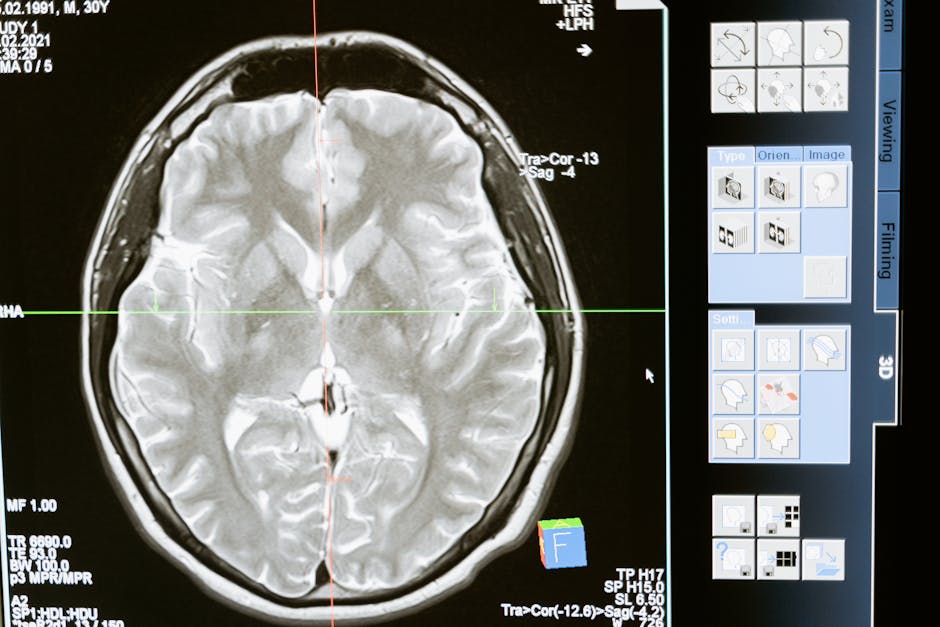
Merege-Filho and colleagues (2016) gave 67 children creatine for a week and then measured directly in the brain using magnetic resonance spectroscopy, across three regions. Result: no measurable increase. No cognitive change. Their conclusion was that the brain largely covers its own creatine needs and takes little interest in what's floating past in the blood.
Turner and colleagues (2015) did find an increase after seven days. It came to 9.2 per cent. For comparison: in muscle, increases of 20 to 40 per cent are routine.
How sharp this separation is becomes clear in a 16-week study on fibromyalgia patients. Phosphocreatine in muscle rose by 80 per cent and strength improved measurably. Cognitive function, pain, sleep quality and quality of life stayed exactly where they were.
A full muscle store tells you nothing about the brain. That's the sentence that dismantles most creatine promises.
Confirmation comes from an unexpected direction. A systematic review of 19 rodent studies published this year found that creatine improves learning and memory in rats and mice. But the strongest effect appeared with intranasal delivery, meaning when you bypass the digestive tract entirely. Oral delivery was considerably weaker. That's animal data and not directly transferable. As a pointer to where the problem lies, it's unambiguous.
What the meta-analyses actually show
There are two usable meta-analyses. Prokopidis and colleagues (2023) analysed eight controlled trials, Xu and colleagues (2024) sixteen trials with 492 participants.
Both find a memory effect. The effect sizes come to 0.29 and 0.31. Translated: measurable, statistically sound, small. Nothing you would notice on any single working day.
For processing speed and attention Xu also finds effects, but rates the certainty of those findings as low under GRADE. Only for memory does she reach moderate certainty.
And then comes the part that rarely gets quoted: on executive function and overall cognitive performance, the meta-analysis found no effect. Executive functions are planning, prioritising, impulse control. Which is precisely what counts in a full week.
Anyone taking creatine to think more clearly at a strategic level is buying an effect that doesn't appear in the data.
What an effect size of 0.3 means in practice
A short explanation is worth it, because supplement articles throw effect sizes around constantly without ever explaining them.
An effect size, reported in these studies as a standardised mean difference, describes the gap between the creatine and placebo groups measured in units of spread. The rough convention: 0.2 counts as small, 0.5 as moderate, 0.8 as large.
So 0.3 sits at the lower end. In plain terms: the groups overlap heavily. Someone picked at random from the creatine group performs better only slightly more often than someone from the placebo group. Across hundreds of participants that becomes a cleanly measurable difference. For you as an individual it disappears into the noise of your day, somewhere between sleep quality, caffeine, stress and how you happen to feel.
That isn't an argument against creatine. It's an argument against expecting to notice the difference.
What the EU authority says
Here it's worth looking at an institution with no interest in selling you anything.
In November 2024 the European Food Safety Authority examined whether manufacturers may advertise a positive effect of creatine on mental performance. The result: based on the studies submitted, it could establish no association between creatine intake and improved cognitive function.
The practical consequence: in the EU you may not advertise an effect on the brain, concentration or memory. If you see that claim on a label or in a shop anyway, it isn't permitted.
How does that square with the meta-analyses that do find a memory effect? Less contradictory than it sounds. Meta-analyses pool many small studies and find a small average effect. An authority clearing a health claim for an entire market demands a different standard of proof: consistent, robust, reproduced in the general population. The evidence doesn't reach that bar.
Both things are true at once. There is a signal, and it is too weak for a promise.
It depends on who you are
The most revealing part of the Prokopidis paper sits in the subgroups.
Among people aged 66 to 76 the memory effect was 0.88. That's substantial. Among 11- to 31-year-olds it was 0.03. That isn't small, that's zero.
Rawson and colleagues (2008) had already shown this. 22 young adults, six weeks of creatine, a full battery of cognitive tests: reaction time, working memory, logical reasoning, mathematical processing. Not a single value shifted.
Which gives us the rule that organises this entire topic. Creatine fills a gap. It doesn't raise a ceiling.
And here it gets uncomfortable. A trained 45-year-old who eats meat regularly and sleeps reasonably well has full stores. He has no gap. For precisely this group there is no solid evidence of a cognitive benefit. That isn't the message supplement manufacturers would prefer. But it's the one in the data.
Two situations where the picture changes
Vegetarian and vegan diets. Creatine occurs almost exclusively in meat and fish. If you eat neither, your stores are demonstrably lower. Avgerinos and colleagues (2018) and Kaviani and colleagues (2020) report stronger memory effects in this group than in meat eaters. It's the best-supported subgroup there is. If you eat plant-based, you are the most likely beneficiary.
Genuine sleep deprivation. Gordji-Nejad and colleagues (2024) at Forschungszentrum Jülich gave participants a single high dose of creatine during 21 hours of sleep deprivation, 0.35 grams per kilogram of body weight. At 85 kilos that's around 30 grams. They measured high-energy phosphates directly in the brain rather than just comparing test scores. Processing speed and cognitive performance improved. The sleep-deprivation-driven drop in brain pH did not occur.
Turner and colleagues (2015) found something comparable under artificial oxygen deprivation. The collapse in attentional capacity was restored under creatine.
The pattern is clear. Creatine shows up when the brain is under energetic pressure. In the normal state it stays invisible.
One caveat belongs here, otherwise this would be dishonest: both studies ran in a lab, on young healthy participants, with small samples. Transferring that to a long-haul flight or a hard week of negotiations is plausible. It is not proven.
Three expectations the data does not support
Creatine plus strength training adds nothing cognitively. Alves and colleagues (2013) tested this cleanly: 24 weeks, four groups, placebo or creatine, with or without strength training. Both training groups improved substantially on the depression scale. Creatine without training produced no meaningful advantage in memory, attention or inhibitory control.
The systematic review by Stares and Bains (2020) covering 17 controlled trials reaches the same conclusion: no additive effect of creatine beyond training itself on mental measures. A large training study in 103 older adults published this year shows the same picture. The improvements in cognition and neurocognitive markers came from the training. The compound that reliably protects your brain after 40 isn't called creatine. It's called strength training.
There is a serious dissenting voice. McMorris and colleagues (2024) conclude in their systematic review that the effect on cognition is equivocal. Their main criticism targets the methodology: in most studies brain creatine content was never measured at all. Researchers went looking for effects without checking whether the compound had even arrived.
Creatine does not prevent dementia. There is simply no human data on this. If you read it somewhere, it's invented.
How solid the data for older adults really is
Earlier this year the most thorough review to date on creatine and cognition in people over 55 was published. Marshall and colleagues (2026) searched eight databases and found six studies covering 1,542 people in total. Five of them report a positive association, mainly for memory and attention.
Sounds solid. The fine print changes the picture considerably.
Only two of the six studies were genuine double-blind interventions. The other four were cross-sectional studies that estimated creatine intake from dietary recall. Studies like that can show two things occurring together, but not that one causes the other. Someone who eats a lot of meat and fish differs in many ways from someone who doesn't.
And the authors' own quality rating: one study "good", two "fair", three "poor". Their own conclusion is that high-quality clinical trials are still needed. The large memory effect in older adults that gets quoted everywhere also rests substantially on a 2007 study with 32 participants. That's a thin foundation for a claim repeated this often.
The real reason to take creatine after 40
So far this sounds like a rejection. It isn't. It's a shift in the reasoning.
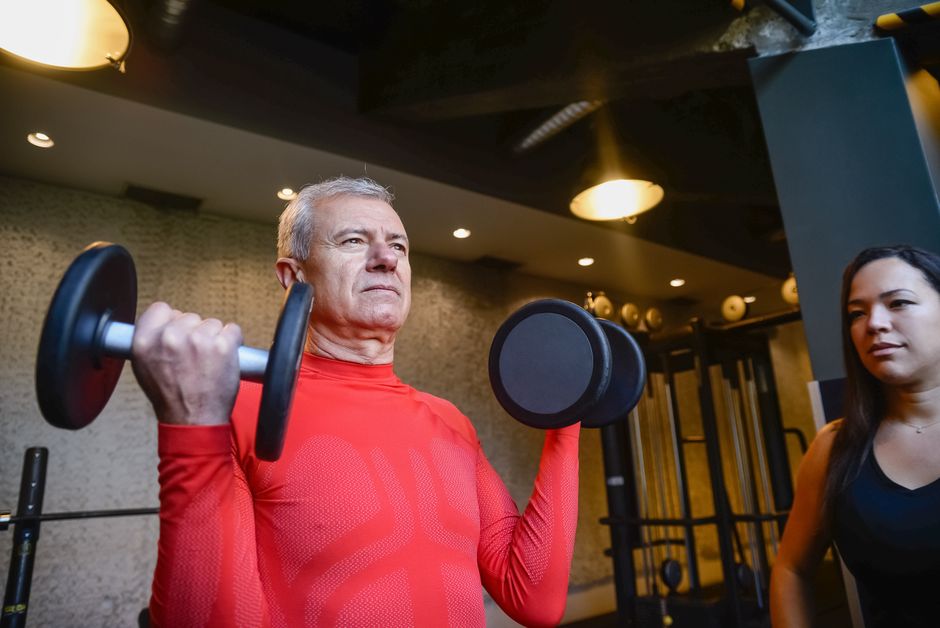
From around 40 onwards, without countermeasures, you lose muscle mass every decade and maximal strength faster still. That's exactly where the creatine evidence is strong, while it stays thin for the brain.
Stares and Bains (2020) state the condition precisely: additive effects on strength, functional capacity and lean mass can be expected when creatine is taken continuously at a low daily dose and combined with at least twelve weeks of resistance training. Women show more consistent effects than men.
Two conditions, then. Daily, and with training. Creatine without strength training is expensive urine.
So here's the honest order: take creatine for your muscles. If your brain benefits alongside, that's a bonus. Not a commitment. If you treat supplements with general scepticism, you're right to — creatine is one of the few that earns an exception.
Dosage, side effects, safety
The safety profile is good. The International Society of Sports Nutrition position stand (2017) summarises it: up to 30 grams daily for up to five years is well tolerated, studied in groups ranging from infants to the very old.
Three to five grams of creatine monohydrate daily. Time of day is irrelevant. A loading phase is unnecessary; it only speeds up saturation by a few weeks and gives some people stomach trouble.
Monohydrate, nothing else. Practically all the solid evidence rests on it. Hydrochloride and ethyl ester have a far thinner evidence base and cost more. The one study that ran exactly in the age group around 50 used hydrochloride and had nine people per arm. Too few to draw anything from. The same principle applies as with choosing the right form of magnesium: the compound decides, not the number on the packaging.
Expect four weeks for the stores to fill. And expect to feel nothing. At an effect size around 0.3 that's the normal case, not a sign that something is wrong.
The scale will show one to two kilos more. That isn't fat. Creatine binds water inside the muscle cell; that's the mechanism, not a side effect. If you compete in a weight class or watch a number, you should know. Otherwise it's irrelevant.
A note for your blood work. On creatine your creatinine reading can rise slightly without your kidney function having deteriorated. Tell your doctor before the blood draw; it saves an unnecessary scare.
When to leave it alone. With known kidney disease, and with elevated risk of it, so for example with diabetes or high blood pressure. In those cases the decision belongs with a doctor, not in a blog article.

The order that matters
Creatine is a good example of a pattern I run into constantly. Someone reads about a supplement, orders it, takes it for eight weeks and then wonders why nothing changed.
The supplement was never the problem.
If you average six hours of sleep, eat too late three times a week and haven't done strength training in months, then creatine is the fourth adjustment in a sequence where the first three are still open. An effect of 0.3 vanishes completely into that noise.
The order is unglamorous and rarely changes: sleep first, then training, then nutrition, then supplements. Reverse that order and you buy yourself activity instead of results. It's the same thinking error that makes much of the biohacking trend problematic: optimising in the wrong place feels productive and isn't.
Creatine is one of the few supplements that earns that fourth place at all. Well researched, safe, cheap, with a documented benefit for muscle. It's just fourth. Not first.
Which adjustment actually comes first for you can't be derived from an article. That's exactly the question a structured assessment answers.
What to take away
Take creatine for your muscles, not your head. For strength and lean mass after 40 the evidence is strong, provided you train alongside it. The cognitive effect is real, but small.
Expect nothing if you're well rested and eat meat. Full stores, no gap, no demonstrable effect. That isn't a disappointment, it's the correct expectation.
If you eat plant-based, you're the exception. This is where the probability of a genuine benefit is highest, because the deficit is real.
Three to five grams of monohydrate daily, no loading phase, twelve weeks of training alongside. Anything beyond that is money spent without documented additional benefit.
If you sleep badly, sleep is the problem to fix. Creatine dampens some consequences of sleep deprivation in a lab. It doesn't replace a night. No powder does.
Does creatine really improve brain performance?
Partly. Two meta-analyses find a small but statistically sound effect on memory (effect size around 0.3). On executive functions like planning and prioritising, and on overall cognitive performance, no effect was found. The European Food Safety Authority concluded in 2024 that the evidence is insufficient for a health claim. The benefit is considerably smaller than usually presented.
How much creatine should I take for the brain?
Three to five grams of creatine monohydrate daily. The meta-analysis found no dose difference between 2.2 and 20 grams, so more is not better. A loading phase is not necessary and the time of day makes no difference.
How long does creatine take to work?
About four weeks for the stores to fill. A noticeable cognitive effect is unlikely at this effect size. If you don't notice anything, that's the normal case and not a sign that something is wrong.
Who benefits most from creatine for the brain?
The benefit is best documented in vegetarians and vegans, because creatine occurs almost exclusively in meat and fish and their stores are lower. There are also indications for phases of sleep deprivation and for people beyond 60. Well-rested, trained meat eaters benefit least according to current evidence.
Does creatine make you gain weight?
On the scale yes, usually one to two kilograms. That isn't fat, it's water bound by creatine inside the muscle cell. It's part of the mechanism, not an unwanted effect. It only becomes relevant if you compete in a weight class.
Is creatine bad for your kidneys?
Not according to the evidence. The International Society of Sports Nutrition position stand describes doses of up to 30 grams daily for up to five years as well tolerated. Worth knowing: your blood creatinine reading can rise slightly on creatine without kidney function having deteriorated. Tell your doctor before a blood draw. With existing kidney disease or elevated risk of it, check with a doctor first.
Scientific sources
- Prokopidis K, Giannos P, Triantafyllidis KK et al. Effects of creatine supplementation on memory in healthy individuals: a systematic review and meta-analysis of randomized controlled trials. Nutrition Reviews. 2023;81(4):416–427. PMID 35984306. doi.org/10.1093/nutrit/nuac064 — memory effect and age differences.
- Xu C, Bi S, Zhang W, Luo L. The effects of creatine supplementation on cognitive function in adults: a systematic review and meta-analysis. Frontiers in Nutrition. 2024;11:1424972. PMID 39070254. doi.org/10.3389/fnut.2024.1424972 — memory, attention, processing speed, GRADE rating.
- Marshall S, Kitzan A, Wright J et al. Creatine and Cognition in Aging: A Systematic Review of Evidence in Older Adults. Nutrition Reviews. 2026;84(2):333–344. PMID 40971619. doi.org/10.1093/nutrit/nuaf135 — study quality in people over 55.
- McMorris T, Hale BJ, Pine BS, Williams TB. Creatine supplementation research fails to support the theoretical basis for an effect on cognition. Behavioural Brain Research. 2024;466:114982. PMID 38582412. doi.org/10.1016/j.bbr.2024.114982 — critical counterposition.
- Avgerinos KI, Spyrou N, Bougioukas KI, Kapogiannis D. Effects of creatine supplementation on cognitive function of healthy individuals. Experimental Gerontology. 2018;108:166–173. PMID 29704637. doi.org/10.1016/j.exger.2018.04.013 — vegetarians, short-term memory.
- Stares A, Bains M. The Additive Effects of Creatine Supplementation and Exercise Training in an Aging Population. Journal of Geriatric Physical Therapy. 2020;43(2):99–112. PMID 30762623. doi.org/10.1519/JPT.0000000000000222 — creatine plus resistance training, the twelve-week condition.
- Gordji-Nejad A, Matusch A, Kleedörfer S et al. Single dose creatine improves cognitive performance and induces changes in cerebral high energy phosphates during sleep deprivation. Scientific Reports. 2024;14:4937. PMID 38418482. doi.org/10.1038/s41598-024-54249-9 — single high dose during sleep deprivation.
- Turner CE, Byblow WD, Gant N. Creatine supplementation enhances corticomotor excitability and cognitive performance during oxygen deprivation. Journal of Neuroscience. 2015;35(4). PMID 25632150. doi.org/10.1523/JNEUROSCI.3113-14.2015 — 9.2 per cent rise in brain creatine.
- Alves CRR, Merege-Filho CAA, Benatti FB et al. Creatine supplementation associated or not with strength training upon emotional and cognitive measures in older women. PLoS ONE. 2013;8(10):e76301. PMID 24098469. doi.org/10.1371/journal.pone.0076301 — 24 weeks, four groups.
- Rawson ES, Lieberman HR, Walsh TM et al. Creatine supplementation does not improve cognitive function in young adults. Physiology & Behavior. 2008. PMID 18579168. doi.org/10.1016/j.physbeh.2008.05.009 — null finding in young adults.
- Merege-Filho CAA, Otaduy MCG, de Sá-Pinto AL et al. Does brain creatine content rely on exogenous creatine in healthy youth? Applied Physiology, Nutrition, and Metabolism. 2016. PMID 28079396. doi.org/10.1139/apnm-2016-0406 — blood-brain barrier, no increase in the brain.
- Kaviani M, Shaw K, Chilibeck PD. Benefits of Creatine Supplementation for Vegetarians Compared to Omnivorous Athletes. International Journal of Environmental Research and Public Health. 2020;17(9):3041. PMID 32349356. doi.org/10.3390/ijerph17093041 — vegetarians compared with omnivores.
- Alves CRR, Santiago BM, Lima FR et al. Creatine supplementation in fibromyalgia: a randomized, double-blind, placebo-controlled trial. Arthritis Care & Research. 2013;65. PMID 23554283. doi.org/10.1002/acr.22020 — muscle up 80 per cent, cognition unchanged.
- Kreider RB, Kalman DS, Antonio J et al. International Society of Sports Nutrition position stand: safety and efficacy of creatine supplementation in exercise, sport, and medicine. Journal of the International Society of Sports Nutrition. 2017;14:18. PMID 28615996. doi.org/10.1186/s12970-017-0173-z — safety profile and dosage.
- Sal-Sarria S, Fernández-Blanco A. Creatine and cognitive function in rodents: A systematic review of behavioral and neurobiological evidence. Behavioural Brain Research. 2026;513:116340. PMID 42331064. doi.org/10.1016/j.bbr.2026.116340 — animal studies, intranasal versus oral.
- Medizin Transparent (Cochrane Austria, University for Continuing Education Krems). Creatine for the brain: effect questionable. medizin-transparent.at/kreatin-gehirn — summary of the EFSA assessment of November 2024 (German).
Medical disclaimer
- This article is for general information and does not replace medical advice, diagnosis or treatment. The study results described refer to group averages and allow no conclusion about any individual case. If you have existing conditions, particularly of the kidneys, take medication, or are pregnant or breastfeeding, speak with your doctor before supplementing.