Lowering cortisol at night means giving your stress system a clear day-night rhythm again. Not a single remedy, but the sum of several levers over weeks. The most effective: bright light in the morning, dim light in the evening, taking intense training out of the late evening, reducing alcohol, keeping blood sugar stable overnight, and building a real wind-down phase before sleep.
- Morning daylight — 10 minutes outside right after getting up
- No hard training in the last three hours before sleep
- Avoid alcohol — it drives cortisol up in the second half of the night
- Dinner with carbohydrates — stabilises overnight blood sugar
- 60–90 minutes before sleep: no emails, no screens, dimmed light
Thomas K. — managing director, mid-forties, trains three times a week — comes in with a sentence I hear often: "I fall asleep like a stone. But at three in the morning I'm wide awake. And then it's over." No brooding over a specific problem. Just awake. The mind runs, the body lies there. Around half past four he drifts off again briefly — and the alarm tears him out of the deepest part.
His first suspicion: too little sleep. His second: age. Both wrong. The pattern — falling asleep no problem, but staying asleep impossible, with wide-awake arousal in the second half of the night — is one of the clearest signs of a nighttime cortisol level that isn't where it belongs.
Lowering cortisol at night is therefore rarely a question of more sleep. It's a question of why the stress system won't shift into night mode. And that has causes — most of them controllable.

Why cortisol rises at night at all — and when it becomes a problem
Cortisol has a bad reputation as a pure stress hormone. That falls short. Cortisol is your most important timekeeper for the day — a hormone that influences almost every organ and is controlled via the so-called HPA axis, the interplay of hypothalamus, pituitary gland and adrenal gland. The Cleveland Clinic describes cortisol as essential for metabolism, blood pressure, immune function and the wake-sleep rhythm — not just for the stress response.
In a healthy rhythm, cortisol follows a clear curve. Its lowest point is around midnight. It then rises slowly in the second half of the night, peaks shortly after waking — the so-called cortisol awakening response — and falls again over the day. That morning peak is intended. It gets you going.
The problem isn't that cortisol rises at night. It's supposed to. The problem is when the rise comes too early, is too steep, or the level never dropped far enough in the first place by evening. That is exactly what happens under chronic stress: a review of the link between sleep and the HPA axis shows that short and disturbed sleep slows the daily decline of cortisol — resulting in elevated evening levels (Balbo, Leproult & Van Cauter, Int. J. Endocrinol. 2010). The system no longer comes down. And a system that doesn't come down can't recover.
What elevated nighttime cortisol does to your body

A persistently elevated nighttime cortisol level is not a comfort problem. It interferes directly with the processes that are supposed to run at night.
Fragmented sleep. Cortisol is a wake signal. If it rises too early, it pulls you out of sleep — often between three and four in the morning. A study in healthy older adults found that nighttime cortisol changes correlate directly with worse subjective and objective sleep quality (Castro-Diehl et al., 2015). You don't wake up because something disturbs you. You wake up because your body thinks the day is starting.
Less deep sleep, less recovery. Deep sleep and high cortisol are mutually exclusive. In the phase where growth hormone is released, tissue is repaired and the immune system regulated, cortisol has no business being there. If your levels are elevated at night, you lose exactly the recovery you went to bed for.
Abdominal fat and blood sugar. Cortisol mobilises energy — it raises blood sugar. At night, when the body doesn't need that energy, this promotes the storage of visceral fat, the belly fat. If training and discipline still won't shift the midsection, this is the place to look — not the plate.
The immune system. Cortisol dampens inflammation — useful short-term, harmful long-term. Chronically elevated levels weaken immune defence. The constant fatigue, the susceptibility to infection under stress — both have a root here.
The real causes — why your cortisol won't wind down at night
This is where the wheat separates from the chaff. Most guides hand you a list of ten tips — magnesium, tea, less stress. That treats the symptom. The real question is: why isn't your system switching off?
In my experience it's almost always the same five drivers — and none of them is the one most people think of first.
1. Light at the wrong time. Cortisol and melatonin are opponents — like a seesaw. Bright light in the evening, especially screen light, keeps cortisol up and suppresses melatonin. Conversely, many people lack the morning daylight that sets the internal clock. The Sleep Foundation describes this interplay as the foundation of the entire sleep-wake rhythm.
2. Training at the wrong time. This is the uncomfortable point — especially for ambitious people. Intense training is a stressor. It raises cortisol, and during exercise that's intended. But putting in a hard session at 8 p.m. signals to the body: it's daytime, there's danger, stay awake. The stimulus is good. The timing ruins the night.
3. Alcohol. A glass of wine relaxes — short-term. As it's metabolised in the second half of the night, cortisol rises, sleep becomes fragmented, and the classic three a.m. waking follows. If you regularly drink in the evening and wake at night, this is your biggest lever.
4. The blood sugar rollercoaster. A late, sugary snack or a completely carbohydrate-free dinner can both backfire. If blood sugar drops too far overnight, the body releases cortisol and adrenaline to counteract it — waking you in the process. A protein-rich meal with a moderate carbohydrate component keeps the level steadier.
5. A mind that never closes. The body doesn't distinguish between physical and mental stress. Answering emails until 11 p.m. keeps the HPA axis active — even while you sit quietly on the sofa. The stress system reads content, not posture.
Lower cortisol at night — the levers that actually work

The strongest timekeeper for the internal clock is light. 10 minutes of daylight right after getting up — even under a cloudy sky — sharpen the cortisol awakening response and ensure the level drops cleanly in the evening. In the evening, the opposite: warm, dim light, ceiling lights off, screens dimmed.
Action: get out into light in the morning, dim from 9 p.m.Intense sessions — heavy strength training, intervals — don't belong in the last three hours before sleep. If evening is your only window, reduce the intensity or switch to calm movement: easy endurance in zones 1 to 2 or mobility lowers cortisol instead of driving it up.
Action: hard sessions before 6 p.m., easy only in the eveningNo lever works faster. Even one consistently alcohol-free weekday evening often changes the waking pattern within days. The test is simple: two weeks without alcohol on weekdays — and watch whether the three a.m. waking disappears.
Action: alcohol-free on weekdays, early and moderate at weekendsNo sugar snack late in the evening — but no empty stomach either. A dinner with protein and a moderate carbohydrate component — potatoes, rice or legumes — prevents the overnight blood sugar dip that calls the stress system into action.
Action: protein plus complex carbohydrates in the eveningThe brain needs a ramp, not a hard brake. 60 to 90 minutes before sleep: no emails, no news, no agitating content. Instead, boring routine — reading, stretching, a few minutes of slow breathing with a lengthened exhale. That activates the parasympathetic system and measurably lowers cortisol release.
Action: a fixed wind-down routine, the same every eveningWhat these levers have in common: none of them is a product. No supplement, no gadget, no expensive test. Magnesium and the like can support — but they don't replace a rhythm. If you don't have the rhythm, you can save your money on the pills. (My favourite supplement against nighttime cortisol, by the way, is called "charge your phone in another room". Works surprisingly well.)
The most common mistake high performers make — the double load
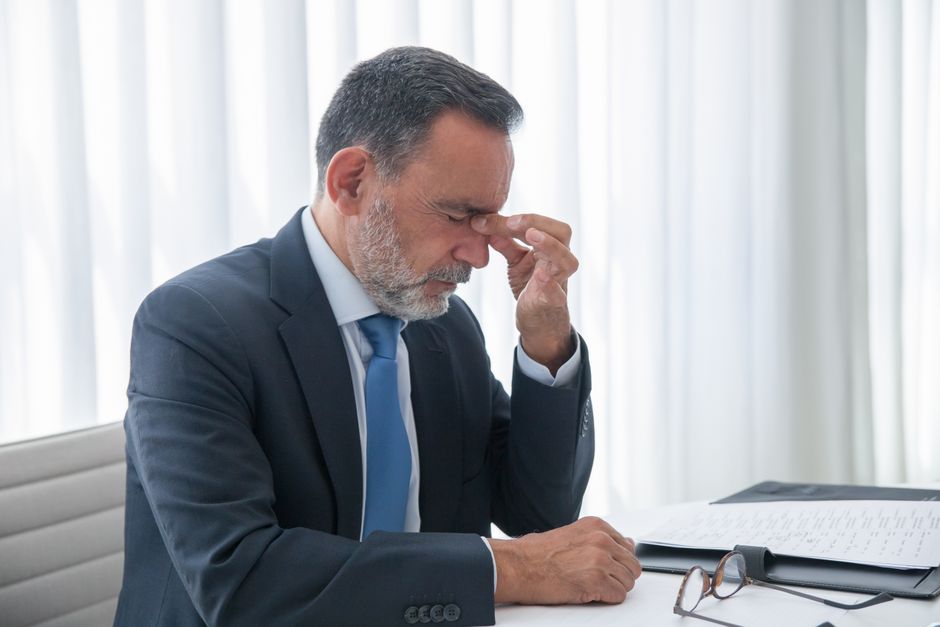
There's a pattern I see again and again in entrepreneurs and ambitious athletes. The day is full, the pressure high, the mind racing. And the counterbalance is supposed to be training — preferably hard, preferably in the evening, because there's no time during the day.
The problem: the body doesn't distinguish between a difficult meeting and a heavy set of squats. Both are stress. Both raise cortisol. If you've had a 12-hour day under full mental load and then add an intense session in the evening, you're loading your system on two fronts at once — and then wonder why the night isn't restful.
With Thomas K. it was exactly that. Three hard evening sessions a week, plus a glass of red to come down and the phone in hand until lights out. We did nothing spectacular. Moved training to the lunch break and the early weekend. Cut alcohol on weekdays. A reading routine instead of a screen. After a good two weeks the three a.m. waking was gone. His HRV as a marker of recovery rose measurably.
That's the core: less is more here. Sometimes the best training session is the one you don't do. Not out of laziness — out of strategy. If you're chronically wired, you don't need an extra dose of stress in the evening. You need a system that's allowed to wind down again.
When to have it checked by a doctor
Most cases of elevated nighttime cortisol are functional — a question of lifestyle and rhythm, not of disease. They can be changed with the levers above. But not all.
You should pay attention with clear physical signs: heavy night sweats, a racing heart on waking, unexplained weight gain especially around the trunk, very thin skin or purplish stretch marks. These can be indications of a hormonal disorder such as Cushing's syndrome — rare, but worth investigating. And if nothing improves over several weeks despite a consistent routine, it belongs in a doctor's hands.
A salivary cortisol day profile — four measurements spread across the day — shows whether the curve is shifted. That is more informative than a single blood draw, which only provides a snapshot. How to read and interpret such values correctly is a topic of its own — more on that in the article on the full blood panel and what it really tells you.
Important: I don't replace a doctor. What I do is make the system behind it visible — and find the adjustments that make the difference in your context through a structured analysis. Often it's just two or three.
Why do I wake up at three in the morning and can't fall back asleep?
In the second half of the night, cortisol naturally rises to prepare you for waking. If your system is chronically over-activated or your blood sugar drops sharply overnight, this rise can come too early and too strong — you wake up, your brain is instantly alert and starts racing. That is usually not a sleep problem but a sign of a dysregulated stress system.
How can I lower my cortisol levels naturally in the evening?
The most effective levers are: bright daylight in the morning and dim light in the evening, not scheduling intense training for the late evening, reducing alcohol, including a carbohydrate component at dinner for stable blood sugar, and creating a real wind-down phase without screens or emails 60 to 90 minutes before sleep. What matters is not a single trick but the sum of these over several weeks.
Is high cortisol at night dangerous?
Occasionally elevated nighttime cortisol is normal — after a stressful day or hard training, for example. It becomes a problem when the state turns chronic: persistently elevated nighttime cortisol disrupts recovery, weakens the immune system, promotes abdominal fat and raises long-term cardiovascular risk. With heavy night sweats, a racing heart or unexplained weight gain, a doctor should check whether a hormonal disorder is behind it.
Does exercise lower cortisol levels?
It depends on timing and dose. Moderate movement and low-intensity endurance lower cortisol over the day. Intense training, on the other hand, is itself a stressor — it raises cortisol sharply in the short term. Training hard in the evening can be exactly what prevents you from switching off at night. Under chronic stress, less and earlier training is often the better choice.
What role does alcohol play in nighttime cortisol?
Alcohol helps you fall asleep but backfires in the second half of the night: as it is metabolised, cortisol rises, REM sleep is suppressed and waking events accumulate — typically between three and four in the morning. If you regularly drink in the evening and wake up at night, this is the first place to start.
How long does it take for the cortisol rhythm to normalise?
First improvements in how sleep feels often show within a few days once light, training time and alcohol are adjusted. A stable normalisation of the day-night rhythm usually takes two to six weeks of consistent routine. The system is slow — but it responds reliably when the inputs are right.
Scientific Sources
- Cleveland Clinic. Cortisol: What It Is, Function, Symptoms & Levels. — Function and regulation of cortisol via the HPA axis. my.clevelandclinic.org
- Balbo M, Leproult R, Van Cauter E. Impact of Sleep and Its Disturbances on Hypothalamo-Pituitary-Adrenal Axis Activity. International Journal of Endocrinology. 2010;2010:759234. — Sleep disturbance, slowed cortisol decline and elevated evening levels.
- Castro-Diehl C et al. Relationship between Cortisol Changes during the Night and Subjective and Objective Sleep Quality. 2015. — Nighttime cortisol and sleep quality. PubMed Central
- Clow A et al. The circadian system modulates the cortisol awakening response in humans. — Circadian control of the cortisol awakening response. PubMed Central
- National Sleep Foundation. Melatonin and Sleep. sleepfoundation.org. — Interplay of cortisol and melatonin in the day-night rhythm. sleepfoundation.org
- Leproult R, Van Cauter E. Effect of 1 Week of Sleep Restriction on Testosterone Levels in Young Healthy Men. JAMA. 2011;305(21):2173–2174. — Sleep deprivation, cortisol and hormone status.