You do not recognize overtraining by how wrecked you feel after a hard session, but by performance falling over weeks while you keep training. Poor sleep, irritability, loss of appetite and more frequent infections usually come with it. Duration is what decides: if two or three rest days fix it, you were tired. If you are still below your level after two or three weeks, you are in non-functional overreaching. Genuine overtraining syndrome takes months and is rare. Its earlier stages are far more common, and they almost never come from too little recovery alone. They come from a stimulus too unspecific to trigger any adaptation at all.
A 17-year-old tennis player sat in my office one winter because his serve speed had been dropping for six months. He had not trained less in that time, he had trained more. Nine tennis sessions a week, plus conditioning, plus school PE, plus an extra coach at weekends. He had been ill three times that winter, slept badly and had lost interest in most things.
His club put it down to motivation. His parents put it down to a growth spurt. Both were wrong.
When we wrote down a full week for the first time, it came to 17 hours of organised training. Nobody had ever added up all the hours, because they came from four different sources and each one looked reasonable on its own. That is the normal case, not the exception.

Four stages between hard training and overtraining
In everyday use, overtraining covers almost anything that feels bad after a hard week. That is why so much advice on it is useless. In sport science there are four clearly separated states, and they differ less in their symptoms than in how long you need to recover.
The joint statement of the European College of Sport Science and the American College of Sports Medicine has described this gradation as the reference since 2013 (Meeusen et al., Med Sci Sports Exerc 2013).
The normal tiredness after a hard session. Recovery in hours to a few days. Not a problem, but the whole point of training.
hours to daysA short drop in performance from deliberate overload, followed by improvement. The actual target state of a hard block.
days to a weekThe same signs, without the gain. After weeks you are back at your old level at best. This is where most people end up.
weeksProlonged maladaptation over months, involving hormonal and nervous systems. Rare, and always a diagnosis of exclusion.
monthsTwo points from that statement are almost never mentioned in popular articles, although they change the practical handling completely.
First, the authors describe the distinction between stage 3 and stage 4 as very difficult. Athletes show the same clinical and hormonal signs in both cases. To this day there is no laboratory value that proves overtraining syndrome.
Second, and this is the more honest part: the common assumption that stage 4 symptoms are more severe than stage 3 symptoms is scientifically neither confirmed nor refuted. The authors say so explicitly. So anyone who tells you from a symptom list that you are overtrained is guessing. The only solid piece of information is how long the state has been going on.
In practice that means the list of 14 symptoms you find everywhere will not help you place yourself. The calendar will.

The body does not get fitter, it adapts specifically
This is where the real error behind more is better sits. It assumes fitness is a single quantity you raise by supplying training. Physiologically that is not the case.
Exercise physiologist Andy Galpin of California State University, Fullerton sorts physical adaptations to training into nine categories. They are not in arbitrary order: their position in the list says something about how well they tolerate each other.
- Skill and movement quality
- Speed
- Power
- Maximal strength
- Muscle mass
- Muscular endurance
- Anaerobic capacity
- Maximal aerobic capacity
- Long duration steady state
Galpin's point: the closer two of these adaptations sit in the list, the better they can be trained at the same time. Maximal strength and muscle mass get along. Maximal strength and long duration work against each other. And every additional goal you bring into a training block dilutes the main goal.
That has an uncomfortable consequence for ambitious athletes. If you want to improve maximal strength, endurance, mobility, speed and muscle mass in the same block, you end up with fatigue from all five areas and adaptation in none. This is not a question of willpower. It is the signalling biology of the muscle cell.
That is exactly where the grey zone forms, the one most people get stuck in: hard enough to be wrecked, too unspecific to get better. Anyone stuck there rarely has a recovery problem first. They have a target problem. If you want to see how such a block is built concretely, I have written it up as a step-by-step template in Blueprint Digital.
So in practice the question is never how much should I train. It is: which two adaptations do I actually want to change over the next eight to twelve weeks, and which ones am I only maintaining? Anything you only maintain in a block needs a fraction of the volume you would otherwise pour into it.
Wrong progression: volume is the weakest dial
When a plan stops working, the reflex is almost always the same: add a session. Volume is the most visible dial and the one that feels most like hard work. It is also the one that creates fatigue fastest and says least about the direction of adaptation.
The principle of progression has considerably more dials: load, repetitions, sets, density, movement speed, range of motion, technical quality, rest length. Which one you turn decides which of the nine adaptations you address at all. Turn volume only, and what you mainly train is your tolerance for volume.
The 10 percent rule is a rule of thumb, not a finding
Nearly every guide on the subject names an increase of 5 to 10 percent per week. No source is ever given, because there is none. The number comes from running literature of the 1980s and has never been properly validated.
The direction is documented, the number is not. The International Olympic Committee's consensus work on load concludes that rapid changes in load in particular go with raised injury risk, while high capacity built up over a long time tends to protect (Soligard et al., Br J Sports Med 2016). The problem is not the height of the load, it is the pace at which it changes.
The counter-argument belongs here too. The best-known way of quantifying that pace, the ratio of acute to chronic workload, was taken apart thoroughly by Impellizzeri and colleagues. Their criticism hits the core: because both values come from the same data, associations appear even where none exist, and the usual cut-off points are arbitrary. Anyone steering their training by that number on a dashboard is steering by an artefact.
What survives is plain enough. Change one variable per block. Wait two weeks. See what happens. That is slower than it should feel, and it is the reason structured athletes pass people after two years who spent two years adding something new every week.
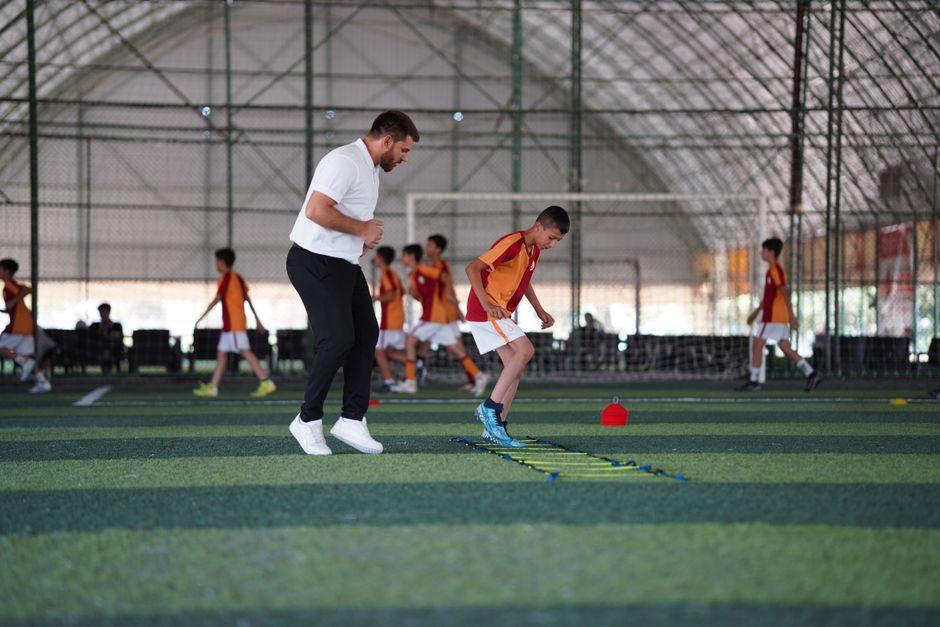
Young athletes: what the numbers show
In adults, too much training usually costs time. In adolescents it more often costs joints, and sometimes the enjoyment of the sport. There are numbers on this point that are almost never quoted.
A case-control study at two sports medicine clinics covered 1,190 young athletes aged 7 to 18, of whom 822 were injured and 368 were not. After adjusting for age and weekly hours, three associations remained (Jayanthi et al., Am J Sports Med 2015):
- Specializing in a single sport was an independent risk factor regardless of volume: odds ratio 1.27 for injury overall and 1.36 for serious overuse injury
- Doing more weekly hours of organised sport than your age in years came with more than double the odds of a serious overuse injury: odds ratio 2.07
- A ratio of organised training to free play above 2:1 came with an odds ratio of 1.87 for serious overuse injury
That makes the rule of thumb "no more weekly hours than years of age" not a limit, but a usable orientation. For a 14-year-old it means more than 14 hours of organised training per week is a reason to look closely. All hours count, school PE and the second team included.
A side finding from the same study clears away a popular excuse. Growth rate was identical in both groups, 4.8 centimetres per year, and showed no association with injury risk. The growth spurt is not the explanation. The training week is.
What these numbers do not say
This is a case-control study at evidence level 3. The injured adolescents came from sports medicine clinics, the comparison group from primary care, and training hours were self-reported. That shows an association, not a cause. The much-quoted review by Myer and colleagues on early specialization is only a non-systematic review at level 4 with the weakest recommendation grade. Deriving hard cut-offs from it overstretches the data.
What is useful from that work is mainly the definition. Specialization means year-round training for more than eight months a year, committing to one main sport, and dropping the others. If all three apply, the rest of the week deserves a very close look.
The factor hardly anyone checks
In young athletes a second mechanism comes in, one only indirectly connected to training. A growing 16-year-old training 15 hours a week has an energy requirement that few normal eating patterns cover. If available energy stays too low for long, bone metabolism, hormonal axis, immune system and performance all suffer, no matter how good the training plan is.
The International Olympic Committee has described this picture as Relative Energy Deficiency in Sport since 2014 and revised the consensus substantially in 2023 (Mountjoy et al., Br J Sports Med 2023). One point matters for practice: it affects male athletes too, which was overlooked for years. When a young athlete stagnates, is constantly tired and starts collecting stress fractures, energy intake belongs on the table before the training plan does.
Misplaced ambition rarely comes from the athlete alone
In twenty years I have barely met a young athlete who trains seventeen hours a week off their own bat. The hours come from the environment.
The work by Myer and colleagues names it directly: adults around young athletes raise the risk by pushing intensity in organised sessions instead of allowing self-directed free play. Club fixtures, trials, squad places and the line "miss a week and you are out" create a pressure a 16-year-old has no veto against.
On top of that comes a structural problem: nobody has the overview. The club coach knows his three sessions. The strength coach knows his two. The school knows its PE lessons. Every single plan is reasonable. The sum is not.
So the most effective measure with young athletes is not a training method but a sheet of paper. Write down every hour of a typical week, from every source, competition and travel included. I have rarely seen a total that did not come as a surprise.
I say this without wagging a finger, partly because I knew no better myself. At seventeen I considered a rest day a character flaw. My knee disagreed, and it won the argument.

Measure instead of guess: four markers are enough
Because symptom lists do not separate the stages, you need something that changes before performance drops. Four measures do the job, and none of them costs more than two minutes a day.
Measure for four to six weeks before you read anything into it. After that only the deviation from your own normal range counts, never the single value and never a comparison with others.
act from 3 days in a rowA hand dynamometer costs little and measures in ten seconds. Grip strength falls under systemic fatigue earlier than any maximal strength lift.
daily, in the morningA countermovement jump, three attempts, best value. Power responds to fatigue far more sensitively than strength and needs no lab.
2 to 3 times a weekDesire to train, appetite, sleep quality, irritability. Subjective, but in practice the fastest early indicator if you write it down.
daily, 30 secondsA word of caution about trackers. These devices measure resting heart rate and variability reasonably well, sleep stages only roughly, and the daily recovery score tempts you into replacing a feeling with a number. I have written that up in more detail elsewhere, including the research on orthosomnia, the phenomenon where preoccupation with sleep data makes sleep worse.
The principle holds: each of these values only means something against your own baseline. A single value says nothing. Three days in the same direction say something.
What to do once you are already in it
The first question is not what you change, but how long this has been going on. Everything else follows from that.
A few days means two or three rest days and the matter is closed. Two to four weeks of falling performance calls for a deload: volume to roughly half, part of the intensity kept, technical work continued. A complete break is rarely necessary at this stage and has the drawback that sleep rhythm, appetite and daily structure fall away with it.
Before you touch the training, two things matter more. Sleep comes first, because it is the single biggest lever in recovery and overrides everything else. Energy intake comes second, especially with young athletes. How those connect is set out in detail in the article on recovery.
If performance stays down for more than six to eight weeks despite cutting back, it belongs in medical hands. Overtraining syndrome is only diagnosed once other causes have been ruled out, and those are more common than the syndrome itself: iron deficiency, thyroid function, a recent infection, a vitamin D deficit in winter, a depressive episode. What sensibly gets added to a blood panel and what the standard package leaves out is a topic of its own.
The tennis player from the start went from 17 hours down to 10. Two of those were new, namely strength training, which he had not done before. After about ten weeks his serve speed was above where it had been before the decline. Not because ten hours is a magic number, but because for the first time somebody had decided which two things were supposed to get better in that block.
It does not run that smoothly for everyone. Anyone who spent two years in the red needs longer than ten weeks, and some complaints stay. What can almost always be changed is the direction.
Load management is only one lever among several. How it connects with sleep, nutrition and diagnostics is set out in the overview on longevity.
How do I tell whether I am overtrained or just tired?
By duration. Normal training fatigue clears after one to three rest days, and performance afterwards is the same or better. If performance stays below your level for two to three weeks even though you have cut back, you are looking at non-functional overreaching. Genuine overtraining syndrome lasts months and is only diagnosed once other causes such as iron deficiency, thyroid dysfunction, infection or a depressive episode have been medically ruled out.
How long does it take to recover from overtraining?
It depends on the stage. Acute fatigue clears in hours to days, functional overreaching in days to about a week, non-functional overreaching in weeks. With overtraining syndrome you count in months. The joint ECSS and ACSM consensus names exactly this timeline as the main distinguishing feature, because the symptoms themselves barely differ between stages.
How many hours of training per week are too many for a teenager?
A case-control study of 1,190 young athletes aged 7 to 18 found that those doing more weekly hours of organised sport than their age in years had markedly higher odds of a serious overuse injury (odds ratio 2.07). For a 14-year-old that means more than 14 hours per week. It is an orientation rather than a limit, and it covers all hours together: club, school PE, second team, weight room.
Is a raised resting heart rate a reliable sign of overtraining?
No. A single raised morning heart rate says little, because alcohol, a late meal, a starting infection, heat or a poor night produce the same effect. Meaning comes from the trend: a deviation from your own baseline across three or more consecutive days. To this day there is no single blood or cardiac marker that proves overtraining syndrome.
Does a deload work, or do I need a complete break?
In the first two stages a deload is usually enough: cut volume sharply, keep part of the intensity, carry on with technical work. A complete break is rarely necessary and has the drawback that sleep rhythm and appetite fall away with it. That no longer applies where overtraining syndrome is suspected; there, medical assessment comes first.
Is the rule about increasing weekly training volume by no more than 10 percent correct?
The 10 percent rule is a rule of thumb, not a study finding. The direction is documented: rapid jumps in load raise injury risk, as the 2016 IOC consensus statement on load in sport sets out. The number itself has never been validated. The most common way of quantifying it, the ratio of acute to chronic workload, was shown by Impellizzeri and colleagues to have fundamental methodological flaws. In practice it is more useful to change one variable per block and wait for the response.
Scientific sources
- Meeusen R, Duclos M, Foster C et al. Prevention, diagnosis, and treatment of the overtraining syndrome: joint consensus statement of the European College of Sport Science and the American College of Sports Medicine. Med Sci Sports Exerc. 2013;45(1):186–205. PMID 23247672. doi.org/10.1249/MSS.0b013e318279a10a — distinguishing overreaching from overtraining syndrome.
- Jayanthi NA, LaBella CR, Fischer D et al. Sports-specialized intensive training and the risk of injury in young athletes: a clinical case-control study. Am J Sports Med. 2015;43(4):794–801. PMID 25646361. doi.org/10.1177/0363546514567298 — weekly hours, specialization and injury risk in 7- to 18-year-olds.
- Myer GD, Jayanthi N, DiFiori JP et al. Sport Specialization, Part I: Does Early Sports Specialization Increase Negative Outcomes and Reduce the Opportunity for Success in Young Athletes? Sports Health. 2015;7(5):437–442. PMID 26502420. doi.org/10.1177/1941738115598747 — definition of early specialization and the role of the environment.
- Soligard T, Schwellnus M, Alonso JM et al. How much is too much? (Part 1) International Olympic Committee consensus statement on load in sport and risk of injury. Br J Sports Med. 2016;50(17):1030–1041. PMID 27535989. doi.org/10.1136/bjsports-2016-096581 — change in load as a risk factor.
- Impellizzeri FM, Tenan MS, Kempton T et al. Acute:Chronic Workload Ratio: Conceptual Issues and Fundamental Pitfalls. Int J Sports Physiol Perform. 2020;15(6):907–913. PMID 32502973. doi.org/10.1123/ijspp.2019-0864 — methodological criticism of the acute-to-chronic ratio.
- Mountjoy M, Ackerman KE, Bailey DM et al. 2023 International Olympic Committee's (IOC) consensus statement on Relative Energy Deficiency in Sport (REDs). Br J Sports Med. 2023;57(17):1073–1097. PMID 37752011. doi.org/10.1136/bjsports-2023-106994 — relative energy deficiency in female and male athletes.
- Bergeron MF, Mountjoy M, Armstrong N et al. International Olympic Committee consensus statement on youth athletic development. Br J Sports Med. 2015;49(13):843–851. PMID 26084524. doi.org/10.1136/bjsports-2015-094962 — guiding principles for developing young athletes.
- Galpin A. Optimize Your Training Program for Fitness & Longevity. Huberman Lab Guest Series, Stanford University, 2023. hubermanlab.com — practitioner source on the nine adaptations and how well they tolerate each other, not a study.
This article is for general information and does not replace medical advice. A sustained drop in performance has many possible causes and belongs in medical hands before it is labelled overtraining. That applies particularly to adolescents, to absent or lost menstrual periods, to repeated stress fractures and to persistent low mood. Training recommendations are individual: what suits one person may be too much for another.