Relative Energy Deficiency in Sport (RED-S) occurs when too little energy is left for the body's basic functions once training has taken its share. The body then saves where it can: hormones, bone metabolism, immune function, mood and performance. It affects men and women, elite athletes and recreational ones. The usual cause is not a training error alone, but the combination of more volume and less food.
I made this mistake for years. Not out of ignorance about training, but right in the middle of it: I trained like someone who knows what he is doing while eating too little, convinced it would make me leaner and stronger. The logic looked clean. Less energy in, more energy out, the rest takes care of itself.
It did not take care of itself. My strength numbers stalled, then dropped. I picked up every infection going, slept worse, and lost my patience over things that would never normally bother me. And I drew exactly the wrong conclusion, the one almost everyone draws at that point: I need to work harder. So more training, and stricter with food. I had read every textbook I could get hold of back then. The one chapter I missed was the one about me.
That is the part that matters to me before we get to definitions: experience does not protect you from this. You can know a great deal about training theory and still fail to see your own whole picture. Which is why this article is not written with a wagging finger.

What overtraining actually means
The term gets used for everything. Anyone with two hard weeks behind them and a flat feeling in their legs will say they are overtrained. Technically that is almost always wrong, and the distinction is worth making, because the consequences differ.
The joint consensus statement of the European College of Sport Science and the American College of Sports Medicine separates three states. Functional overreaching is the planned version: you overload deliberately, performance dips briefly, and after a few easier days it comes back higher. That is not a problem, that is training methodology. Non-functional overreaching is the step beyond: performance stays down for weeks and recovery takes considerably longer than planned. Overtraining syndrome is the state in which months pass before things improve, often alongside hormonal and psychological changes.
How to tell those stages apart in daily practice is covered in more detail in the article on recognising overtraining. This piece is about something else: the cause underneath many of those cases, the one that almost never comes up in conversation.
Because genuine overtraining syndrome is a diagnosis of exclusion. Before it can be established, other reasons for the same drop in performance have to be ruled out: infection, thyroid problems, iron deficiency, depression. And energy deficiency. In practice, that last one is the least frequently checked.
The error: eat less, train more
I see this pattern in variations again and again. Someone wants to get leaner, already trains a lot, and decides to cut energy intake. The first few weeks work, the scale moves, which confirms the plan. Then something happens that looks from the outside like a lack of discipline: it stops. Weight plateaus, performance drops, and the body looks worse than before. And because the plan appeared to work, it gets tightened.
The body does not respond to an energy shortfall the way the model predicts. It does not patiently burn fat and leave everything else untouched. It prioritises. Reproduction, bone remodelling, immune defence and heat production are all negotiable from a survival point of view when energy runs short. So they get throttled. That is not a malfunction, it is a sensible adaptation to scarcity, just not one you want if your goal is performance and health.
There is one more item missing from the arithmetic: muscle is expensive to maintain. Spend long enough with too little energy and too little stimulus to justify keeping it, and you give away the exact tissue you were training for. That does not make you leaner. It makes you smaller and weaker at a similar body fat percentage.

Relative Energy Deficiency in Sport, explained
There is a technical term for this. The International Olympic Committee introduced Relative Energy Deficiency in Sport, RED-S for short, in 2014. A substantially revised consensus statement followed in 2023, sharpening the definition and adding an assessment tool for practice.
The word "relative" is the key part. This is not about absolute calorie amounts and not about being underweight. It is about the relationship between energy taken in and what training consumes of it. Whatever remains is what the body has available for everything else: heart, brain, hormonal system, immune defence, bone building, repair. That remainder is called energy availability. When it gets too small, the saving programme starts. Which is why someone at a completely normal weight can be affected while someone with far less body fat is not.
That a kind of threshold exists was shown by a group around Anne Loucks back in 2003. In a controlled study of regularly menstruating women, the pulsatile release of luteinising hormone changed below an energy availability of roughly 30 kilocalories per kilogram of fat-free mass per day. That figure is a laboratory value from a small group and explicitly not a target to aim at. Calculating it reliably requires a body composition measurement and an accurate record of intake, and both are error-prone. The principle matters, not the number.
This affects men just as much
For a long time the topic ran under the heading "Female Athlete Triad", the combination of energy deficiency, menstrual dysfunction and reduced bone density. That narrowing was one of the reasons for the rename. Both sexes are affected, and men lack the clearest early warning sign women have.
In women, the cycle reports back. It becomes irregular, lighter, or stops. That is unpleasant, but diagnostically valuable, because it is a visible signal. A study of female athletes in the British Journal of Sports Medicine found that such markers correlate with measurable health and performance consequences.
Men get no such feedback. In them, energy deficiency tends to surface as falling testosterone, reduced libido, poorer recovery and more infections. The exercise physiologist Anthony Hackney describes lower testosterone values in endurance-trained men and openly discusses whether this should be classified as dysfunction or as an adaptation. That uncertainty belongs in the picture. It is one of the reasons RED-S is spotted later in men.
What is affected in the body
Menstrual irregularity up to loss of the period; in men falling testosterone and reduced libido. Plus changes in thyroid and stress hormones.
Reduced bone formation and a higher risk of stress fractures. The consequences often only show up years later.
More frequent upper respiratory infections, longer illnesses, more missed training.
Irritability, low mood, trouble concentrating, restless or short sleep despite a heavy training load.
Resting metabolic rate drops, and so does core temperature. Cold hands and feet are a typical accompanying sign.
Endurance, strength and coordination decline while injury risk rises. The opposite of what the training was for.
In 2021 a group around Trent Stellingwerff compiled how strongly overtraining syndrome and RED-S overlap in symptoms and underlying mechanisms. Both come with performance decline, fatigue, mood changes and hormonal abnormalities. In practice that means: if you suspect overtraining and never ask about the energy side, you may be missing the actual cause.
Warning signs worth taking seriously
No single item on this list proves anything. Several at once, over weeks, alongside a high training load, are reason to look more closely:
- Performance declining despite consistent or even harder training
- Persistent fatigue that does not lift after rest days
- Frequent infections, particularly of the upper airways, and slow recovery from them
- Trouble falling or staying asleep despite physical exhaustion
- Irritability, low mood, lower tolerance for stress
- Irregular or absent periods with no other explanation
- Declining libido, often the first hormonal sign in men
- Stress fractures or recurring bone and tendon complaints
- Weight that no longer moves despite a deficit
- Constantly cold hands and feet, feeling cold in normally heated rooms
- Loss of motivation and enjoyment in training
- Thoughts circling around food, weight and training volume
I include the last point deliberately. When food starts to cause anxiety, or when a missed session triggers guilt, that is the level at which a coach is no longer the right person to talk to. Doctors, psychotherapists and specialist services exist for that, and going to them is not a failure. In the UK, Beat offers free and confidential helplines; in Austria and Germany, comparable services are run by public health bodies.
Risk group 1: recreational athletes on elite plans
Elite training plans are public. Volumes, weekly structure, intensity distribution, all of it sits in podcasts, blogs and training apps. That sounds like the democratisation of knowledge, and in part it is. The problem lies in what does not come with it.
A professional has a system around the training. Sleep taken as needed rather than as the calendar allows, meals someone plans and sometimes cooks, physiotherapy, regular diagnostics, and a coach who adjusts the load when something tips. On top of that, years of gradually built tolerance and, not least, the genetic makeup that got them there in the first place.
Put the same volume into a normal life and it gets added to everything else: a full-time job, a commute, responsibility for children or parents, deadline pressure, six hours of sleep on weeknights. The body does not distinguish between physical and psychological load. A hard day of negotiations and a hard interval session land in the same account.
And it is in this group that the energy side slips most easily. Not by intention, but because daily life arranges it that way: breakfast gets skipped, a snack between two meetings at midday, training in the evening, and by the time it is over it is late and the appetite has gone. It adds up. A review by Logue and colleagues in Nutrients compiled studies on low energy availability and reports widely varying frequencies depending on sport, sex and method of assessment. Solid numbers specifically for ambitious recreational athletes are largely missing, and that is part of the problem: this group is rarely studied and even more rarely screened.
If you train seriously and recognise several of the warning signs, an honest assessment of where you stand is worth more than the next plan. That is what the Blueprint Session is for: looking at load, recovery, nutrition and diagnostics together instead of turning one dial and hoping for the best.
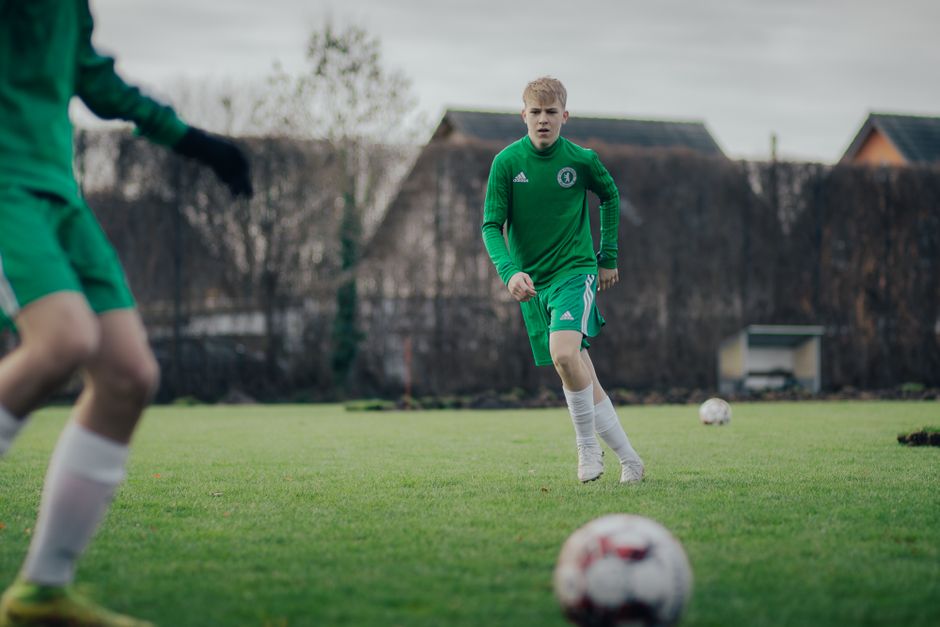
Risk group 2: teenagers in competitive sport
This is where it gets serious, for a reason that cannot be made up later. A growing body needs energy for growth itself, on top of training. Undersupply during this phase is paid for not only in performance, but in substance that will not be built again.
The National Osteoporosis Foundation's position statement on peak bone mass records that by far the greatest part of it is laid down in childhood and adolescence. Little can be corrected afterwards. An energy deficiency during puberty therefore hits precisely the window in which bone strength for the following decades is set. Add to that possible effects on pubertal development and growth.
The pressure behind it is rarely malicious. It comes from a mix: sports in which a particular body shape counts as part of performance, comparisons within the squad, training groups that work with volume rather than quality, and adults who mean well. In that constellation, the teenager has the least decision-making power of anyone involved.
What parents and coaches can do
The most effective measure is unspectacular: watch whether enough is being eaten, and keep the subject ordinary. Anyone in a young athlete's environment who comments on weight, appearance or portion sizes, however kindly, shifts something that is hard to shift back.
Concrete reasons to ask questions: performance stagnates or falls across a whole season. Periods stop or start late. Infections or bone complaints become frequent. The child withdraws from shared meals, eats only by their own rules, or avoids entire food groups. In each of those cases a sports medicine assessment belongs in the picture, not a change of training programme on suspicion.
More on how support differs from optimisation is written up for parents of teenage athletes.
The way back to sufficient energy
The most important sentence first: eating is part of training, not its opponent. Energy is the material adaptation is made from. Without it you set stimuli that arrive nowhere.
What helps in practice is less spectacular than most people expect. Load and recovery belong together, not one after the other. A training week without planned easier days is not a hard week, it is an incomplete one. How to build that in a structured way is covered in the overview on recovery.
For monitoring, I would take the scale out of the leading role. It does not answer the question that matters. Trends tell you more: resting heart rate over weeks, the direction of heart rate variability, sleep duration and quality, mood, and above all performance itself. Rising strength numbers at an unchanged sense of effort are a better sign than any number on the scale. What counts is the trend across two to four weeks, not a single morning reading.
And then there is the line where my remit ends. If RED-S is suspected, a sports medicine assessment belongs in the picture: blood panel, hormone status, and with a relevant history, a bone density scan. The energy side belongs with a sports dietitian or a physician specialising in nutrition, particularly when eating behaviour itself is part of the problem. I am a trainer and coach, not a doctor. What I can do is make the connections visible and steer training so that it supports recovery rather than preventing it. Someone else makes the diagnosis.
What I took away from my own years is unspectacular and still changed the most: the question is not how little you can get by on. The question is how much your body needs to handle what you are asking of it. Where this sits in the larger picture of staying capable across decades is covered in the overview on longevity.
What is the difference between overtraining and RED-S?
Overtraining describes a state following too much load with too little recovery. RED-S describes the consequences of low energy availability, meaning too little energy for basic functions once training has taken its share. The two overlap heavily in symptoms, and an energy deficiency can be the actual cause behind what looks like overtraining. That is precisely why the energy side belongs in any assessment of a performance decline.
Can RED-S affect men too?
Yes. The earlier term Female Athlete Triad was one of the narrowings that led to the rename. In men, however, the clearest early warning sign is missing, because there is no cycle to report back. Instead it tends to show up as falling testosterone, reduced libido, frequent infections and poorer recovery. On average it is recognised later.
Do you have to be underweight to be affected?
No, and that is the most common misconception. What matters is not body weight but the relationship between energy intake and training expenditure. Someone at an entirely normal weight with a high training volume can have low energy availability, while someone with less body fat and moderate training does not.
How do I know whether I am eating too little for my training?
By patterns, not by a single sign. The typical combination is stagnating or falling performance, persistent fatigue, frequent infections, poor sleep, feeling cold, and weight that no longer moves despite a deficit. In women, menstrual irregularity comes on top; in men, declining libido. Several of these over a period of weeks are reason for a medical assessment.
How long does recovery from an energy deficiency take?
That depends on how long and how pronounced the shortfall was. Hormonal function and the menstrual cycle often need months to normalise, and bone density longer still. A blanket figure would be dishonest. What can be said: the sooner energy intake is right again and the load adjusted, the shorter the road.
Is it dangerous to follow a professional athlete's training plan?
The plan itself is not the problem. The problem is that the system around it is missing: sleep as needed, planned nutrition, support staff, diagnostics and years of accumulated load tolerance. On top of that, the recreational athlete adds everyday life with work, family and stress. The same load therefore meets considerably less recovery capacity.
Scientific sources
- Mountjoy M, Ackerman KE, Bailey DM et al. 2023 International Olympic Committee's (IOC) consensus statement on Relative Energy Deficiency in Sport (REDs). British Journal of Sports Medicine. 2023;57(17):1073–1097. PMID 37752011. doi.org/10.1136/bjsports-2023-106994 — current definition, affected body systems and assessment tool.
- Mountjoy M, Sundgot-Borgen J, Burke L et al. The IOC consensus statement: beyond the Female Athlete Triad — Relative Energy Deficiency in Sport (RED-S). British Journal of Sports Medicine. 2014;48(7):491–497. PMID 24620037. doi.org/10.1136/bjsports-2014-093502 — introduction of the term and move away from the Triad model.
- Meeusen R, Duclos M, Foster C et al. Prevention, diagnosis, and treatment of the overtraining syndrome: joint consensus statement of the European College of Sport Science and the American College of Sports Medicine. Medicine & Science in Sports & Exercise. 2013;45(1):186–205. PMID 23247672. doi.org/10.1249/MSS.0b013e318279a10a — distinction between overreaching and overtraining syndrome.
- Stellingwerff T, Heikura IA, Meeusen R et al. Overtraining Syndrome (OTS) and Relative Energy Deficiency in Sport (RED-S): Shared Pathways, Symptoms and Complexities. Sports Medicine. 2021;51(11):2251–2280. PMID 34181189. doi.org/10.1007/s40279-021-01491-0 — overlap between the two conditions.
- Loucks AB, Thuma JR. Luteinizing hormone pulsatility is disrupted at a threshold of energy availability in regularly menstruating women. Journal of Clinical Endocrinology & Metabolism. 2003;88(1):297–311. PMID 12519869. doi.org/10.1210/jc.2002-020369 — threshold of energy availability.
- Ackerman KE, Holtzman B, Cooper KM et al. Low energy availability surrogates correlate with health and performance consequences of Relative Energy Deficiency in Sport. British Journal of Sports Medicine. 2019;53(10):628–633. PMID 29860237. doi.org/10.1136/bjsports-2017-098958 — link between markers and consequences in female athletes.
- Hackney AC. Hypogonadism in Exercising Males: Dysfunction or Adaptive-Regulatory Adjustment? Frontiers in Endocrinology. 2020;11:11. PMID 32082255. doi.org/10.3389/fendo.2020.00011 — testosterone in endurance-trained men, including the counterposition.
- Logue DM, Madigan SM, Melin A et al. Low Energy Availability in Athletes 2020: An Updated Narrative Review of Prevalence, Risk, Within-Day Energy Balance, Knowledge, and Impact on Sports Performance. Nutrients. 2020;12(3):835. PMID 32245088. doi.org/10.3390/nu12030835 — prevalence of low energy availability across sports.
- Weaver CM, Gordon CM, Janz KF et al. The National Osteoporosis Foundation's position statement on peak bone mass development and lifestyle factors: a systematic review and implementation recommendations. Osteoporosis International. 2016;27(4):1281–1386. PMID 26856587. doi.org/10.1007/s00198-015-3440-3 — bone mass accrual in childhood and adolescence.
This article is for general information and context. It does not replace medical advice, diagnosis or treatment. The author is a trainer and coach, not a physician and not a nutrition doctor. Where relative energy deficiency in sport is suspected, a sports medicine assessment belongs in the picture; where disordered eating is indicated, medical or psychotherapeutic support and specialist services do. The text deliberately contains no figures for calorie amounts or energy deficits, because such targets are individual and only sensible to set with professional guidance.