The most common mistake in youth sport is not a lack of effort. It is too much load during a phase in which the body is busy growing. Four things matter more than any training programme: how many hours add up in total, whether enough energy arrives, how much sleep happens, and how openly pain can be discussed. Parents can influence all four without being coaches themselves.
The pattern keeps coming back, and it looks almost identical every time. A sixteen-year-old, talented, highly motivated. Club training four times a week, plus strength work at the gym, school sport, competition at the weekend. On top of that a nutrition plan recommended by a professional on Instagram, and three tubs from the supplement shop.
The parents are not doing anything wrong in the sense of being careless. Quite the opposite. They drive, they pay, they organise, they read up. That is exactly the point: the commitment is there, the steering is missing. Each coach only sees their own slice of the week. Nobody sees the whole pile.
And then comes the sentence I have heard so often that I could say it along: he has had knee pain for a few months now, but it keeps going away. None of what follows is an accusation aimed at parents. It is what I tell them in this situation.

Too much of the right thing: load and capacity during growth
A training stimulus is never good or bad on its own. It always works in relation to what the body can currently carry. In an adult, that capacity stays fairly stable over months. In a fourteen-year-old, it does not.
During the pubertal growth spurt, known in sport science as peak height velocity, bone grows faster than tendons and muscles can follow. Leverage changes within a few months, coordination suffers temporarily, and the tendon attachments at the growth plates become the weakest link in the chain. That is why this phase brings exactly the complaints parents recognise: pain below the kneecap, at the heel, at the pelvic rim, in the lower back.
None of this is a reason to stop training. It is a reason to look more closely than usual. The body tolerates less during twelve months of growth than it did in the twelve months before, even though the teenager subjectively feels stronger.
Then there is the volume problem. In 2016 the American Academy of Pediatrics compiled two reference points: no more hours of organised sport per week than years of age, and no more than 16 hours per week in total. The academy explicitly notes that these rules of thumb still need better validation. As a rough measure they are useful anyway, because most parents are surprised by how many hours actually add up once they count honestly.
Two further recommendations from the same statement are more concrete and easier to apply: one to two days per week completely free of the main sport, and across the year roughly three months away from it, in blocks of about one month each. Not the couch, something else. Swimming, climbing or cycling during that time costs nothing.
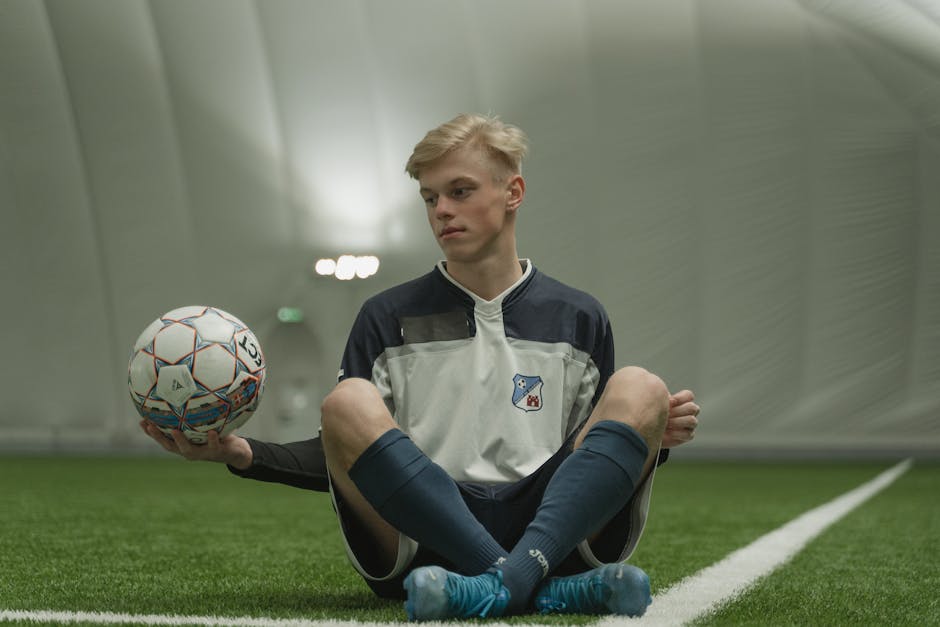
Early specialisation: the picture is less clear-cut than it is usually presented
The common warning is that early specialisation causes harm. That is too short. What the data mainly show is a volume problem: teenagers with very high volume in a single sport and little free play sustain more overuse injuries. Whether the specialisation itself does the damage or the hours that come with it is hard to separate in most studies, because they were collected retrospectively.
There is a second argument that tends to get lost in the debate: the hit rate of early selection is poor. The same statement cites an analysis of German Olympic sports in which only 0.3 per cent of the athletes selected at the youngest level later ranked internationally. Steering a twelve-year-old towards a career means taking a decision with bad odds and high costs.
In practice this does not mean a favourite sport should be banned. It means the risk lies in year-round identical load without a break, not in the enthusiasm for one sport.
Strength training is part of the solution here
One misunderstanding is persistent: that strength training harms growth. The 2014 international consensus says the opposite. Supervised strength training with age-appropriate technique is safe for children and adolescents, improves motor skills and lowers injury risk in sport. The growth plates take no damage as long as technique is sound and load follows competence.
What actually causes harm is unsupervised maximal lifting copied from videos online. The variable is the quality of instruction, not the weight itself. How excessive load builds up over weeks and how to spot it early is covered in detail under recognising overtraining.
The most common nutrition mistake is too little, not the wrong kind
When parents ask me about nutrition, it is usually about details: meal timing, carbohydrates in the evening, the right breakfast. The bottleneck is almost never there. It is in the total amount.
A teenager in competitive sport has two energy consumers at the same time: training and their own growth. If energy is not sufficient for both, the body saves where it does not show up immediately. Bone formation, hormone production and the immune system are throttled long before competition performance drops.
That is exactly what the 2023 IOC consensus statement on REDs, relative energy deficiency in sport, describes. The consequences range from bone health through the hormonal and immune systems to mood and performance. In adolescents this weighs heavier than in adults, because most bone density is built in exactly these years. What is not laid down then can barely be recovered later.

This is made worse by eating patterns designed for adults. Intermittent fasting, strict low-carb approaches and rigid clean eating may work well for a forty-year-old with a desk job. In a fifteen-year-old with ten training hours a week they reliably create a gap. Fasting also collides with training times that are already squeezed between school and the evening.
Protein works the same way. It matters, but in most teenage athletes it is not the limiting factor. Raising the protein share while cutting carbohydrates only moves the real problem somewhere else.
Weight pressure in sports with weight classes or aesthetic judging is a topic of its own. Comments about the body come early there, often in passing, and they stick. The risk of disordered eating is elevated in these disciplines. That is no reason for panic, but it is a reason for a clear boundary: weight topics in minors do not belong in the hands of parents or coaches alone, they need medical supervision.
Supplements: food first, and a risk few people know about
In adolescents, food first is not a matter of attitude but the rule. The reason is simple: if the basics are not in place, a tub of powder only hides the fact that not enough is being eaten. In most cases the most effective supplement in youth sport is a second dinner.
There is also a risk that few parents have on their radar. Legally, dietary supplements are foods, not medicines. Nobody checks the contents before they are sold. An international study by the German Sport University Cologne bought 634 products in 13 countries and found anabolic steroids that were not on the label in 94 of them, that is 14.8 per cent.
For a teenager in drug-tested competition that means a product ordered online can produce a positive test even though nobody intended anything prohibited. Anyone unwilling to drop supplements entirely should stick to products that are systematically screened for doping substances, for example through the Cologne List. That lowers the risk considerably, though nobody brings it to zero.
Caffeine deserves its own paragraph, because it is the most widely consumed substance in this age group, usually as energy drinks. Before a competition it feels like performance. The bill arrives in the evening, when falling asleep does not work. In teenagers, restlessness and a racing heart appear more easily than in adults, because body weight and habituation are lower. The American Academy of Pediatrics considers energy drinks fundamentally inappropriate for children and adolescents.
There are situations in which supplementation makes sense, a confirmed iron or vitamin D deficiency for instance. The order is always the same, though: medical assessment, test result, then targeted and time-limited use. Not the other way round. The general risks of supplementation are covered under dietary supplements and their risks.
Sleep is the training tool that costs nothing
The American Academy of Sleep Medicine recommends 8 to 10 hours per night on a regular basis for 13- to 18-year-olds. Teenagers in competitive sport sit below that almost without exception, and for structural reasons rather than laziness.
During puberty the internal clock shifts later. A fifteen-year-old lying awake at 10 p.m. is not undisciplined, they are biologically normal. The problem arises at the other end: the school day does not shift with them. If evening training only finishes at 9 p.m. and homework and the phone follow, eight hours simply do not fit into the night.

There is also a thinking error running through almost every training plan: school, training and competition are treated as three separate topics. The body does not make that distinction. An exam period is a loading period, even though it appears in no training plan. Leaving the training volume untouched in the week before exams raises total load without anyone noticing.
What parents can steer here is more than they often think. Question training times where an alternative exists. Devices out of the bedroom, not as punishment but as a house rule for everyone. And discuss exam weeks with the coach in advance, rather than explaining afterwards why performance dropped. The mechanics behind this are described under improving recovery and sleep quality.
Support, do not optimise
The most effective role for parents is unspectacular. It does not consist of being the better coach, but of being the only person who sees the whole picture.
When three coaches each steer their own part, nobody steers the sum. A simple calendar holding every session of the week, including school sport and self-directed training, is often the first real moment of clarity. More often than not it shows two to three hours more than anyone had in mind.
The second lever is the kind of conversations you have. The drive home after a competition is not a video analysis. Ask about the feeling, not the result. The sentence that carries the most weight here is an unremarkable one: I enjoy watching you. It makes clear that attention does not hang on performance. That is precisely the point where pressure and motivation part ways.

The third lever is how pain is handled. In many clubs, pushing through still counts as a question of character. For a growing body that is risky, because overuse damage at the growth plates develops gradually and stays quiet for a long time. Recurring pain in the same place is information, not a test.
On its own, none of these is an alarm. Several at once over two to three weeks is a reason to review the load and seek medical assessment:
- persistent tiredness that remains even after days off
- performance declining over several weeks despite unchanged training
- recurring pain in the same place, particularly knee, heel, hip or lower back
- irritability, withdrawal or a sudden loss of motivation
- unintended weight loss or noticeable changes in eating behaviour
- frequent infections and longer recovery times afterwards
- in girls: absent or irregular periods
The last point in particular is often dismissed as a normal side effect of sport. It is not. An absent period in a young female athlete is one of the clearest signs of an energy deficit and belongs in medical hands.
Every session of the week in one place, including school sport, self-directed training and competition. Without that overview, everyone only steers their own piece.
One to two free days per week from the main sport, plus blocks across the year without competition. Not as a reward, as part of the plan.
Three full meals and something around training carry further than any supplement. Supplements only after a test result and medical assessment.
When the week is full, the extra session goes, not the hour of sleep. Eight to ten hours are the baseline at this age.
Recurring complaints in the same place are assessed before they force a break. Pushing through is no virtue during growth.
After a competition, the question about the feeling is the one that counts. Analysis is the coach's job, not the passenger seat's.
Where exactly the gap sits in an individual case cannot be judged from a distance. The route there is always the same, though: look at training history, sleep, nutrition and test results together instead of turning one screw. That is the framework of a structured assessment, and with teenagers it sensibly happens with parent and child together.
At what age does strength training make sense for teenagers?
There is no fixed age limit. What matters is whether a child can follow instructions and concentrate on a technique, which is usually the case from around seven or eight. The 2014 international consensus rates supervised strength training with age-appropriate technique as safe, performance-enhancing and injury-preventive. The growth plates take no damage. The risk lies in unsupervised maximal lifting without technical progression.
How many training hours per week are too many for teenagers?
The American Academy of Pediatrics offers two reference points: no more hours of organised sport per week than years of age, and no more than 16 hours weekly in total. The academy itself notes that these figures still need better validation. As a rough measure they are usable, mainly because counting every session honestly usually produces more hours than expected.
Does my child need protein powder for competitive sport?
As a rule, no. The limiting factor in teenage athletes is almost always total energy intake, not protein. Eating normally and sufficiently covers the requirement through food. There is also the contamination risk: in a study of 634 products from 13 countries, 14.8 per cent contained undeclared anabolic steroids. For teenagers in drug-tested competition that is a real problem.
Are energy drinks dangerous before a competition?
The American Academy of Pediatrics considers energy drinks fundamentally inappropriate for children and adolescents. Caffeine acts more strongly at lower body weight and without habituation, and restlessness or a racing heart appear more easily. The greater damage happens in the evening: caffeine in the afternoon pushes sleep onset later in an age group whose rhythm has already shifted back.
How do I recognise overtraining in my child?
The typical picture is a combination that persists over several weeks: tiredness that does not disappear after days off, declining performance with unchanged training, irritability or withdrawal, more frequent infections, and recurring pain in the same place. Individual points are normal. Several at once over two to three weeks are a reason to review total load.
When should we see a doctor about sport-related complaints?
With pain that lasts longer than two weeks, always appears in the same place, worsens under load or is already noticeable at rest. Likewise with unintended weight loss, absent periods or persistent exhaustion. During growth, overuse damage at the tendon attachments develops gradually and stays inconspicuous for a long time, which makes early assessment more sensible than waiting.
Scientific sources
- Brenner JS; American Academy of Pediatrics, Council on Sports Medicine and Fitness. Sports Specialization and Intensive Training in Young Athletes. Pediatrics. 2016;138(3):e20162148. PMID 27573090. doi.org/10.1542/peds.2016-2148 — training volume, rest periods and early specialisation.
- Bergeron MF, Mountjoy M, Armstrong N et al. International Olympic Committee consensus statement on youth athletic development. British Journal of Sports Medicine. 2015;49(13):843–851. PMID 26084524. doi.org/10.1136/bjsports-2015-094962 — development and resilience in young athletes.
- Mountjoy M, Ackerman KE, Bailey DM et al. 2023 International Olympic Committee's (IOC) consensus statement on Relative Energy Deficiency in Sport (REDs). British Journal of Sports Medicine. 2023;57(17):1073–1097. PMID 37752011. doi.org/10.1136/bjsports-2023-106994 — energy deficiency in sport and its consequences.
- Lloyd RS, Faigenbaum AD, Stone MH et al. Position statement on youth resistance training: the 2014 International Consensus. British Journal of Sports Medicine. 2014;48(7):498–505. PMID 24055781. doi.org/10.1136/bjsports-2013-092952 — safety and benefits of youth resistance training.
- Geyer H, Parr MK, Mareck U et al. Analysis of non-hormonal nutritional supplements for anabolic-androgenic steroids: results of an international study. International Journal of Sports Medicine. 2004;25(2):124–129. doi.org/10.1055/s-2004-819955 — contamination of dietary supplements.
- Paruthi S, Brooks LJ, D'Ambrosio C et al. Recommended Amount of Sleep for Pediatric Populations: A Consensus Statement of the American Academy of Sleep Medicine. Journal of Clinical Sleep Medicine. 2016;12(6):785–786. doi.org/10.5664/jcsm.5866 — sleep requirements in adolescence.
- Committee on Nutrition and the Council on Sports Medicine and Fitness. Sports Drinks and Energy Drinks for Children and Adolescents: Are They Appropriate? Pediatrics. 2011;127(6):1182–1189. doi.org/10.1542/peds.2011-0965 — assessment of energy drinks in minors.
This article is for general information and does not replace medical assessment, diagnosis or treatment. With persistent complaints, suspected overload, unusual eating behaviour or absent periods, consult a doctor, ideally one with sports medicine experience. Supplements in minors always require medical assessment.